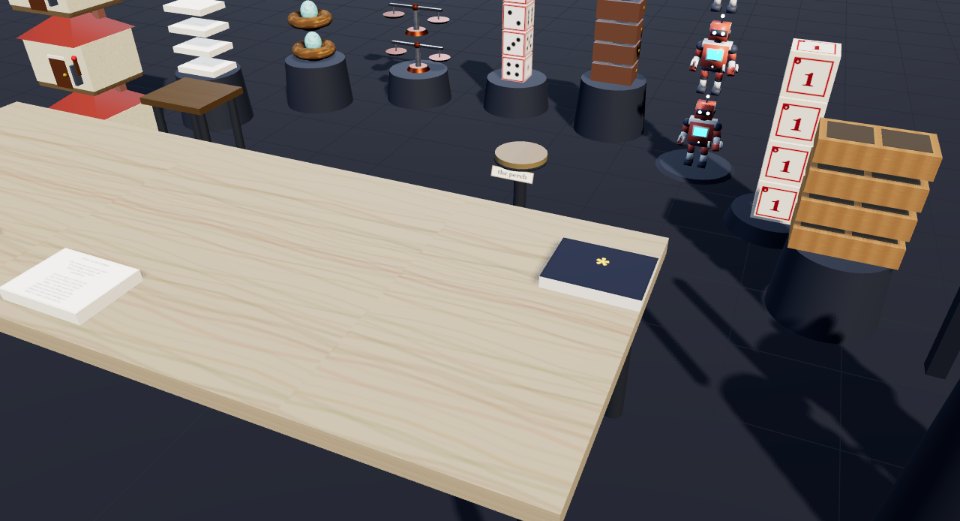
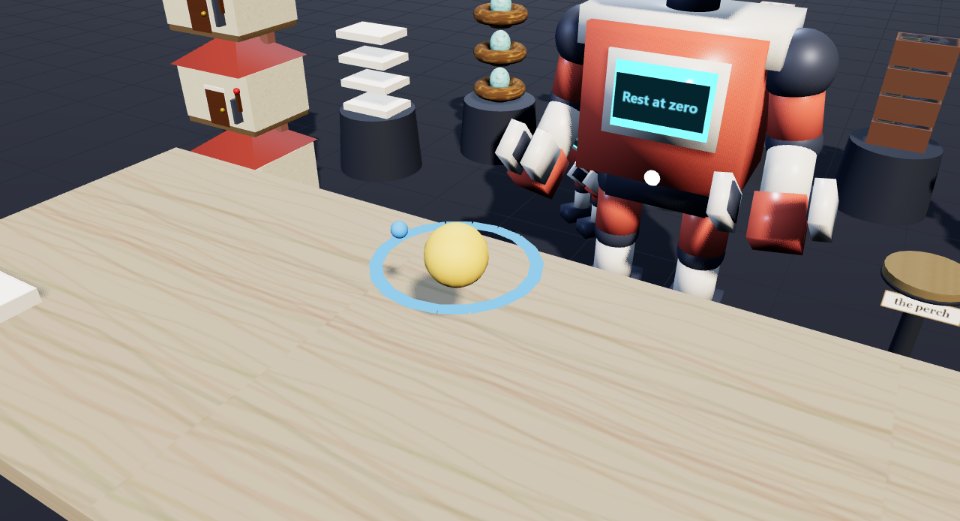
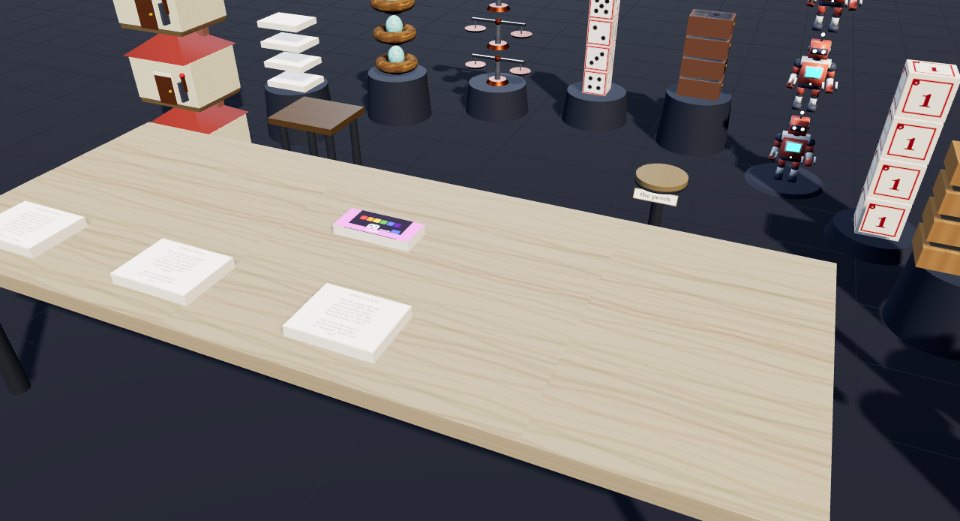
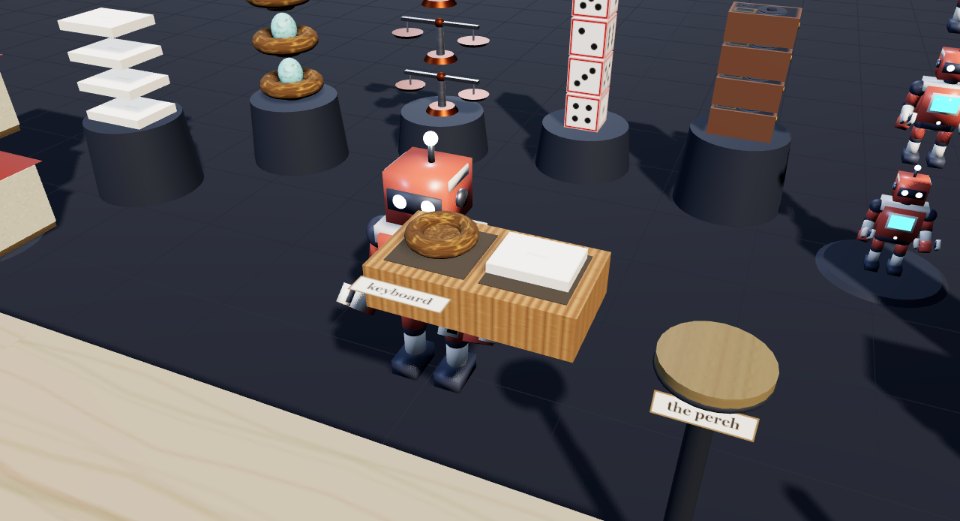
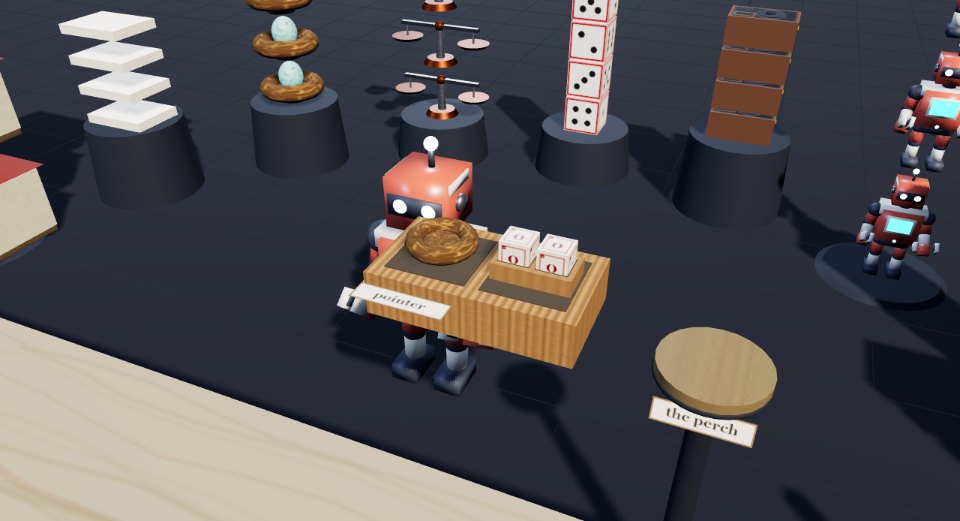
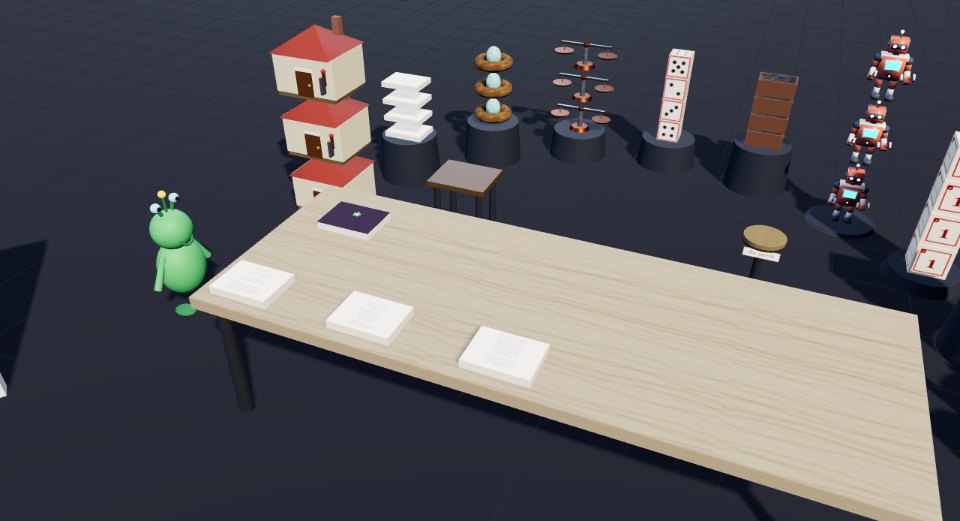
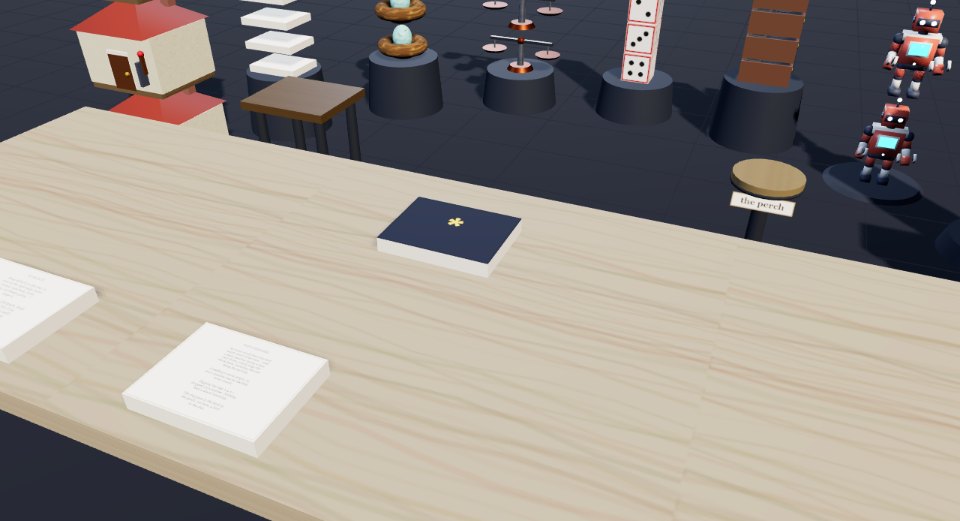
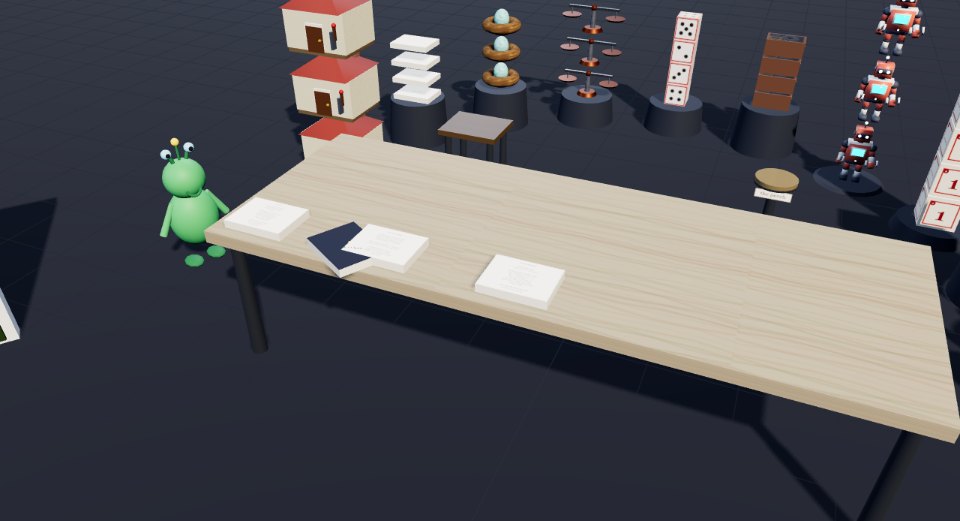
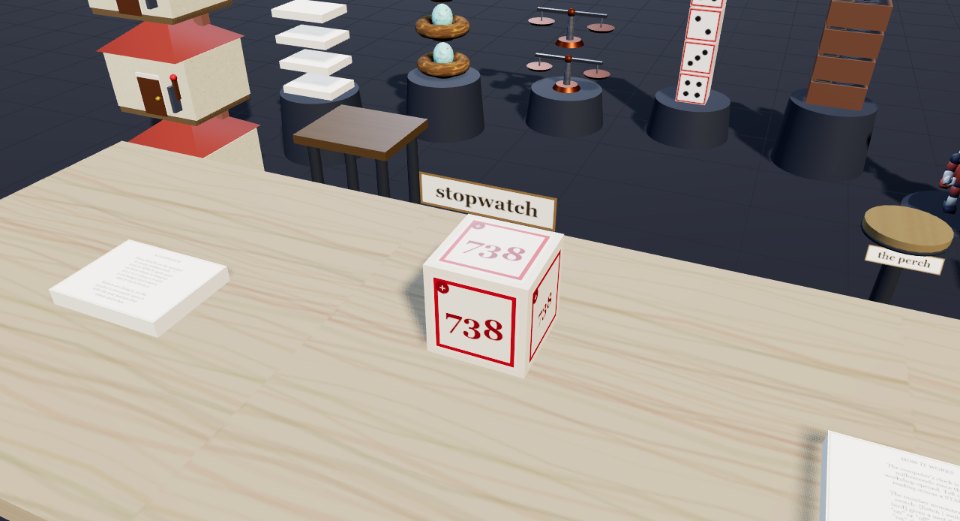
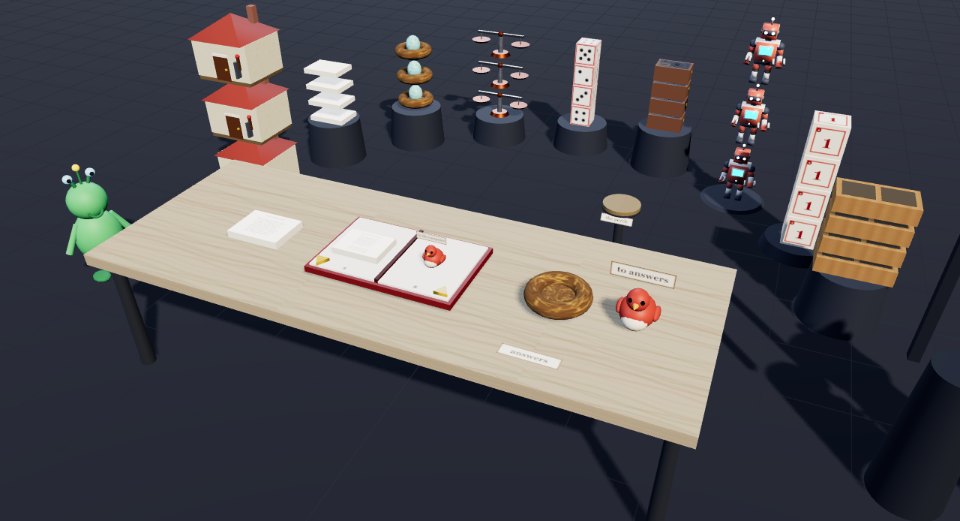
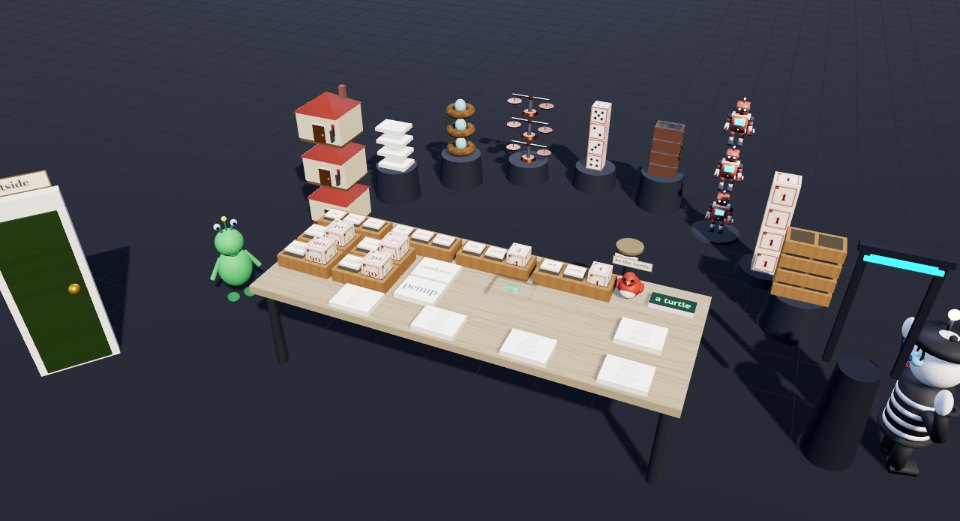
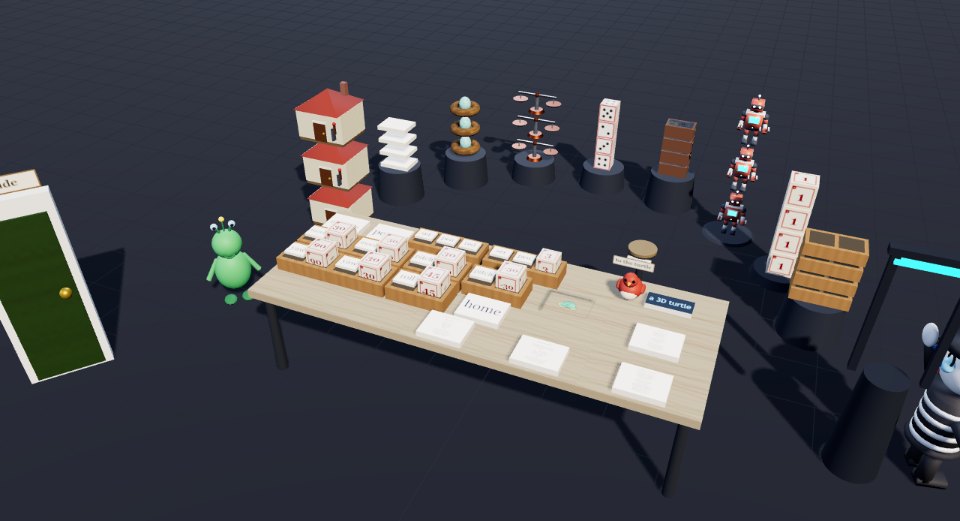
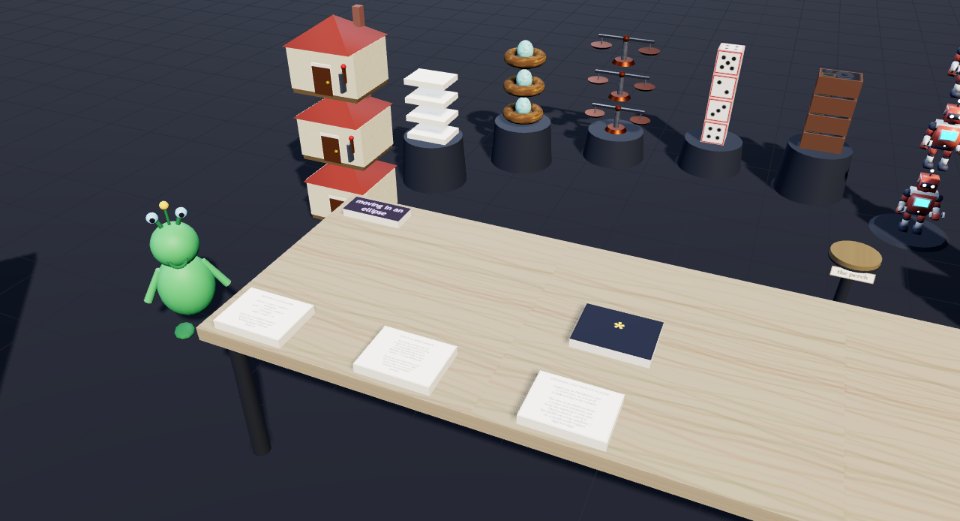
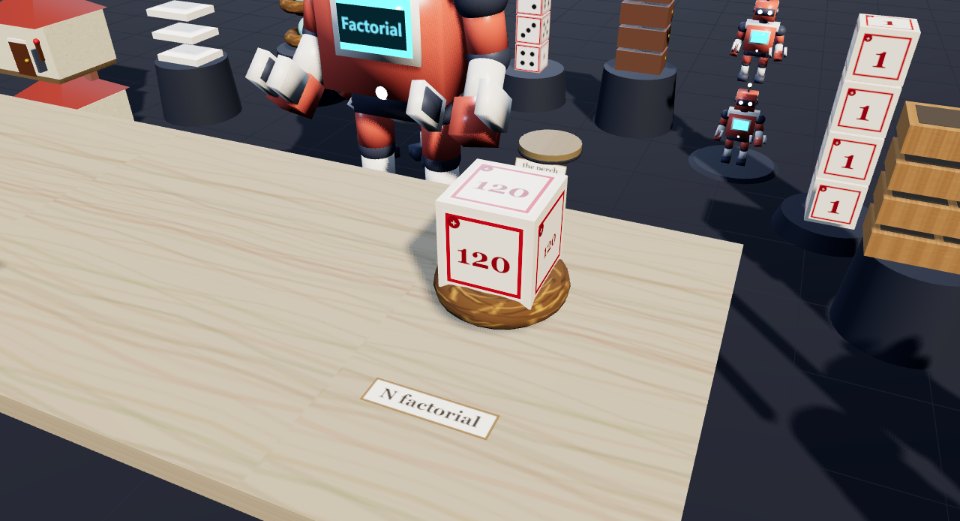
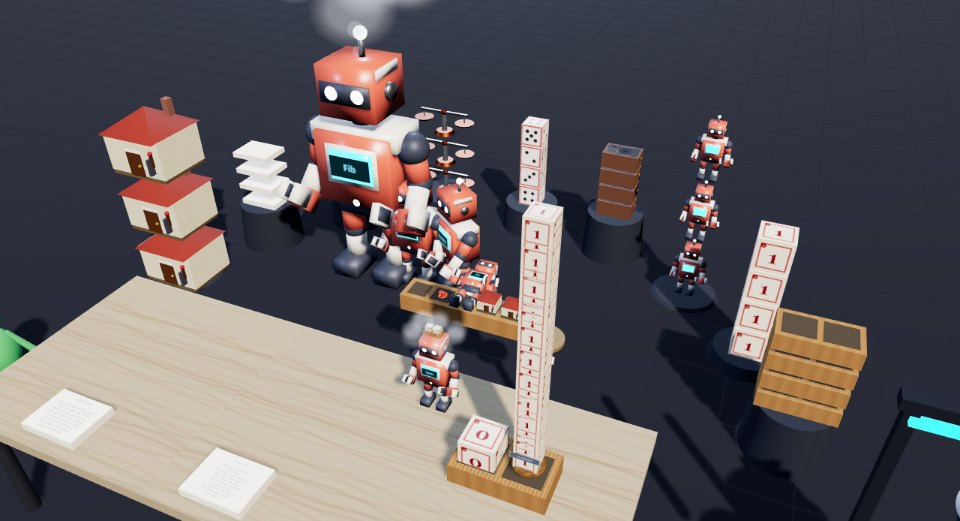
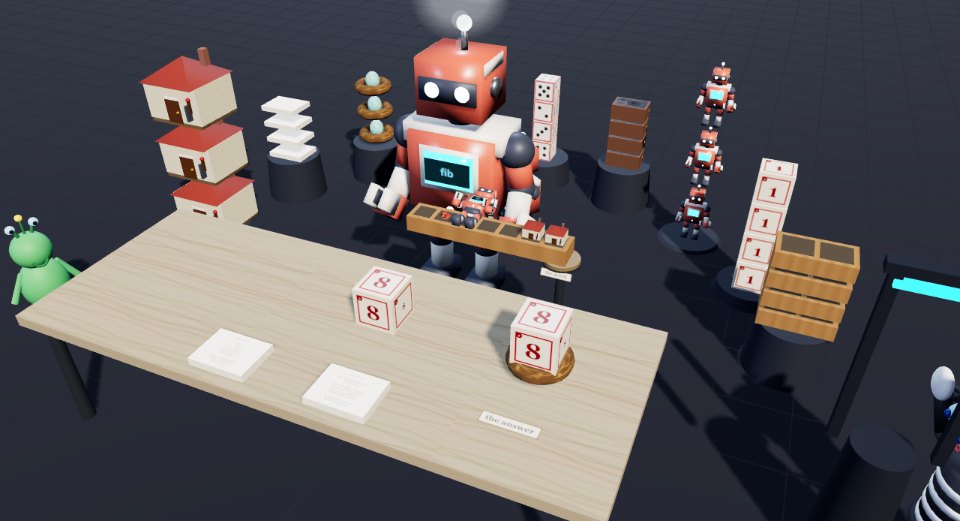
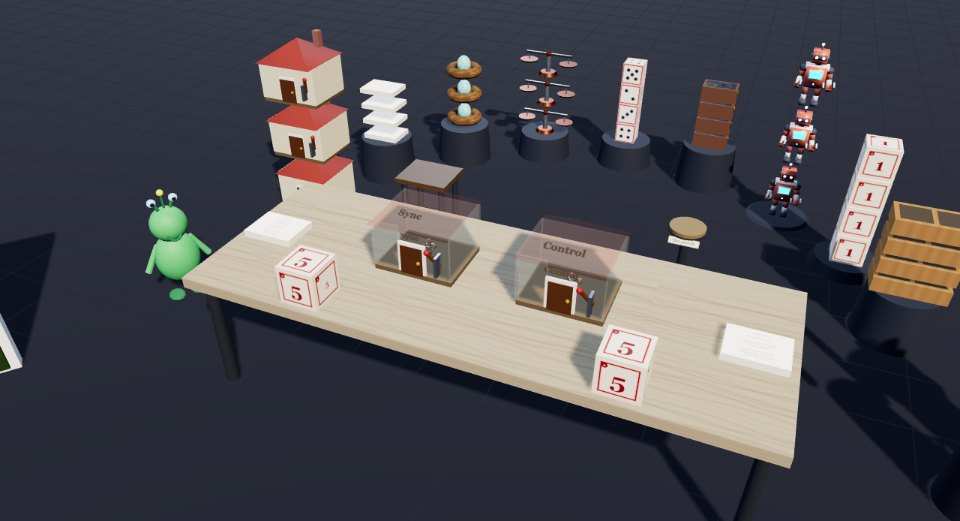
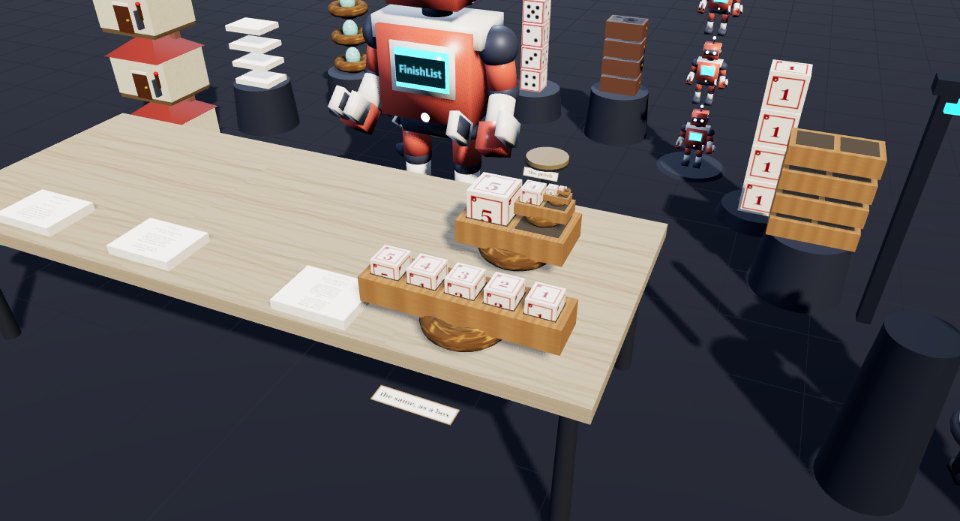
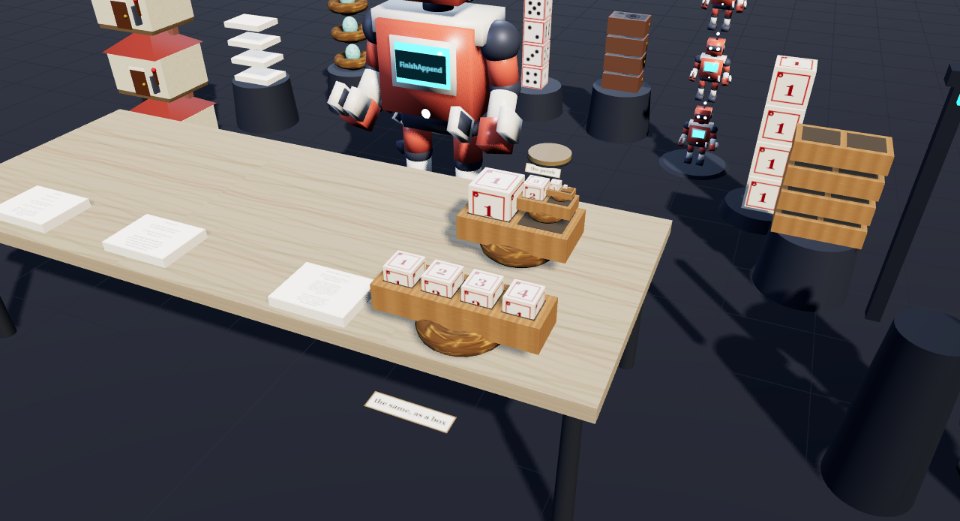
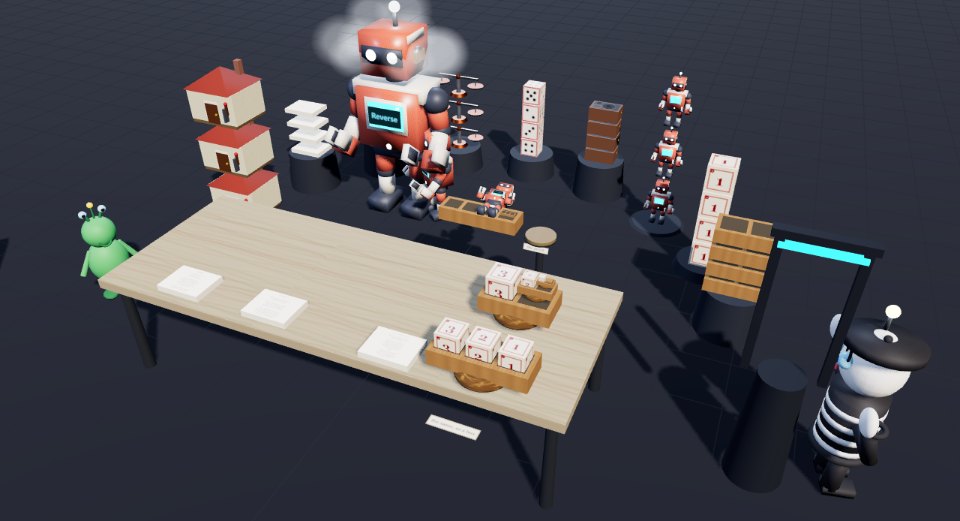
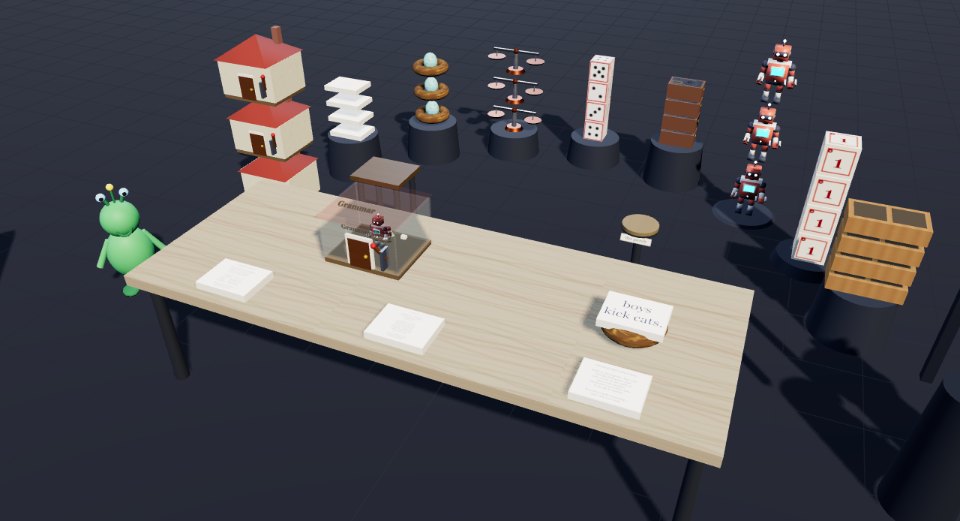
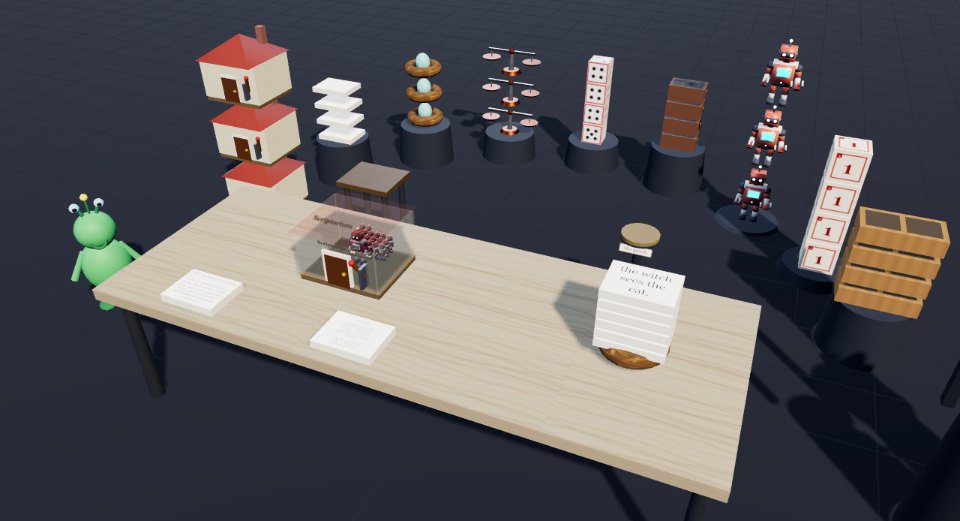
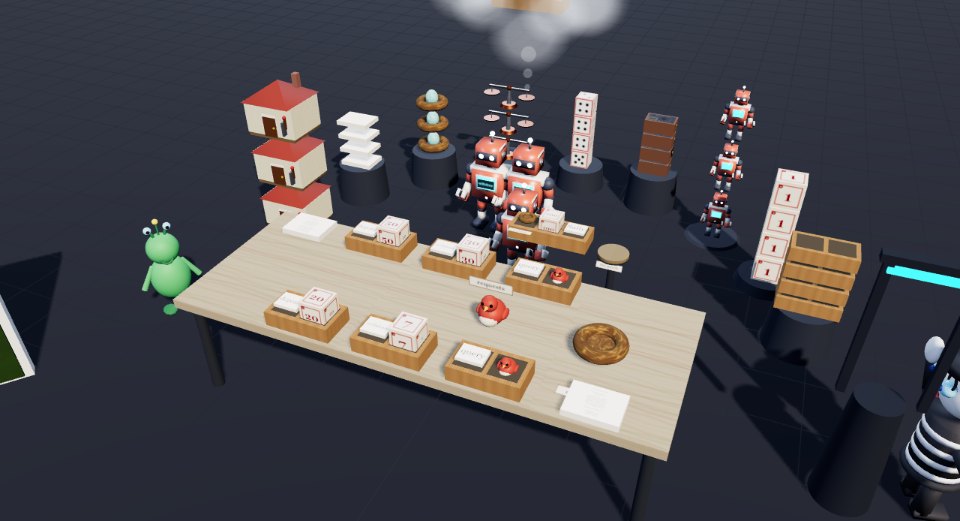
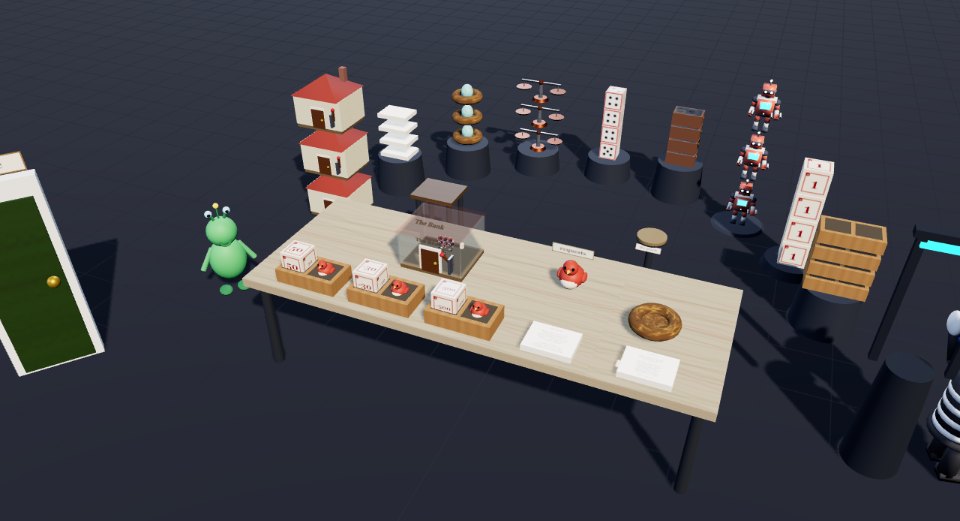
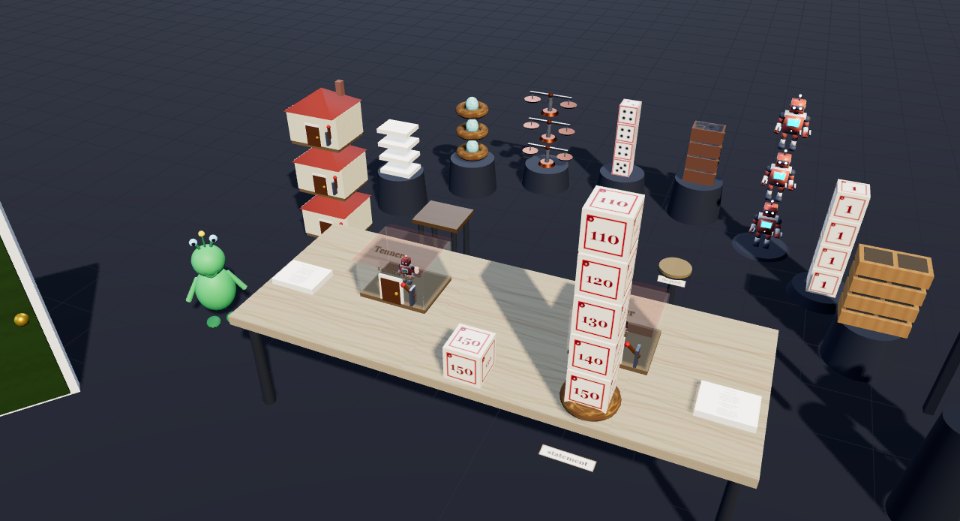
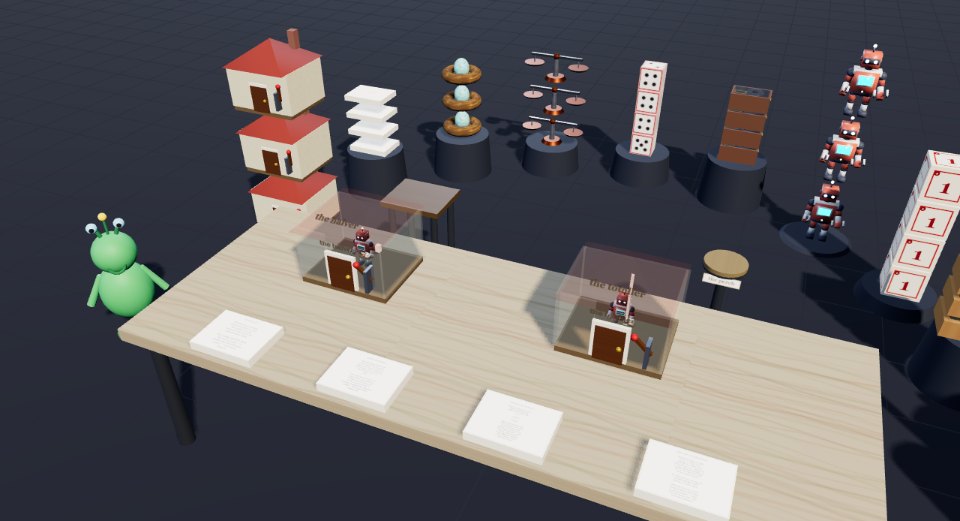
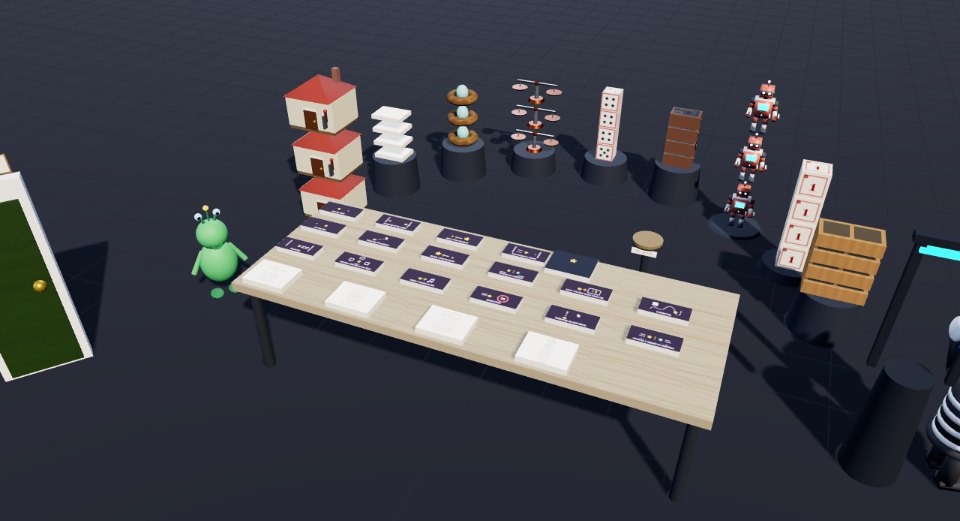
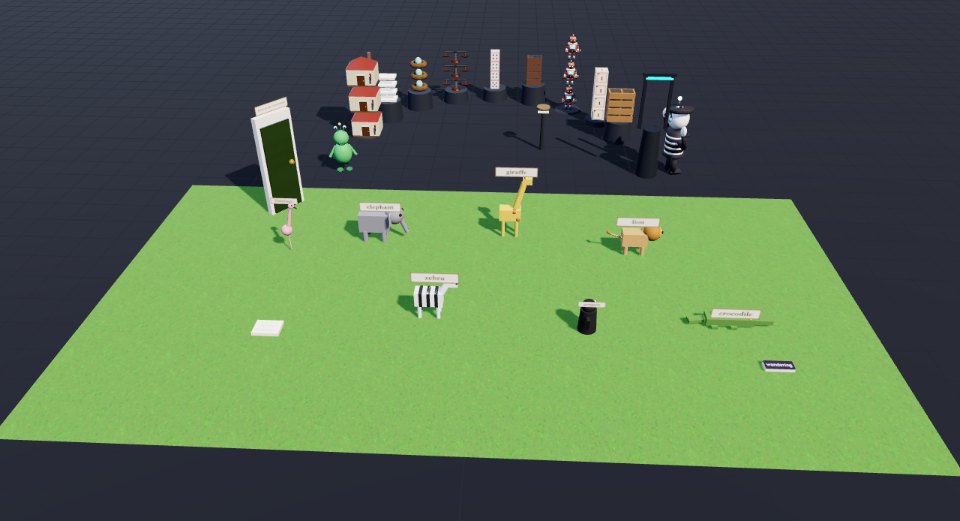
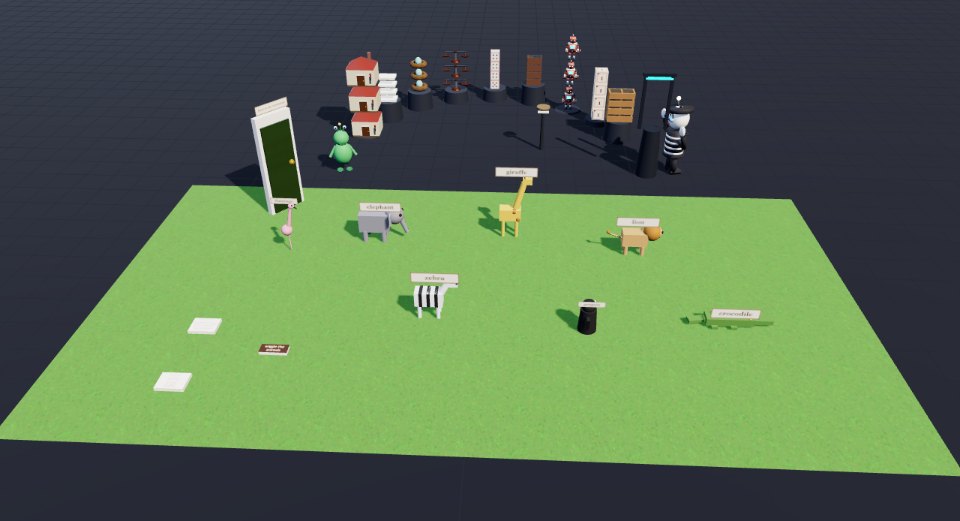
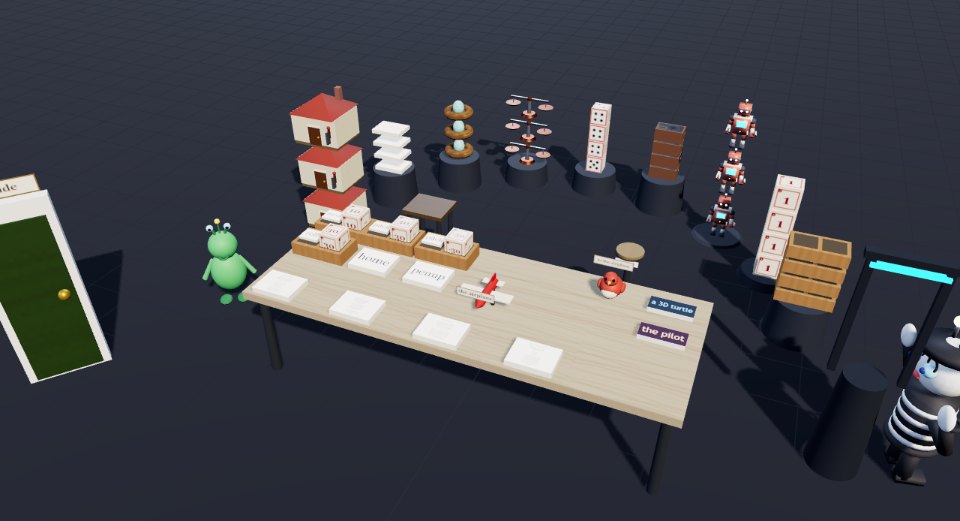
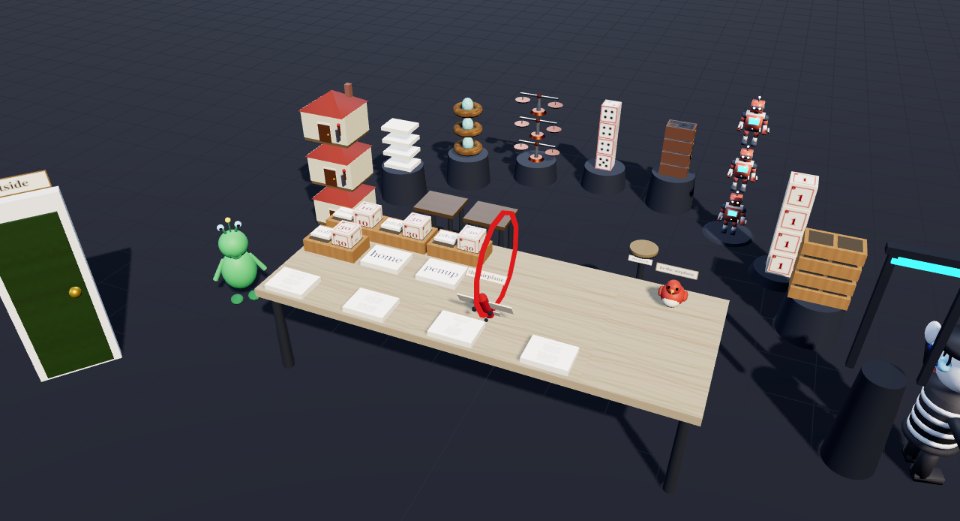
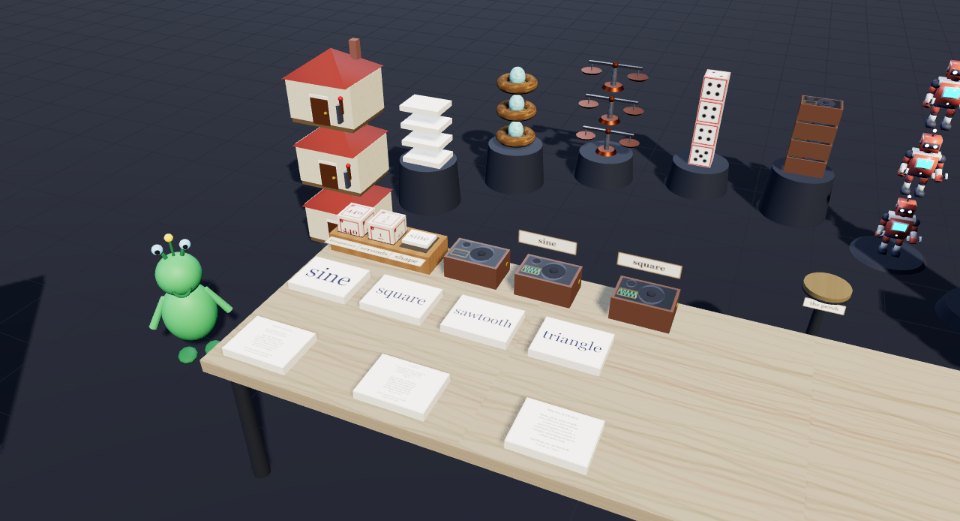
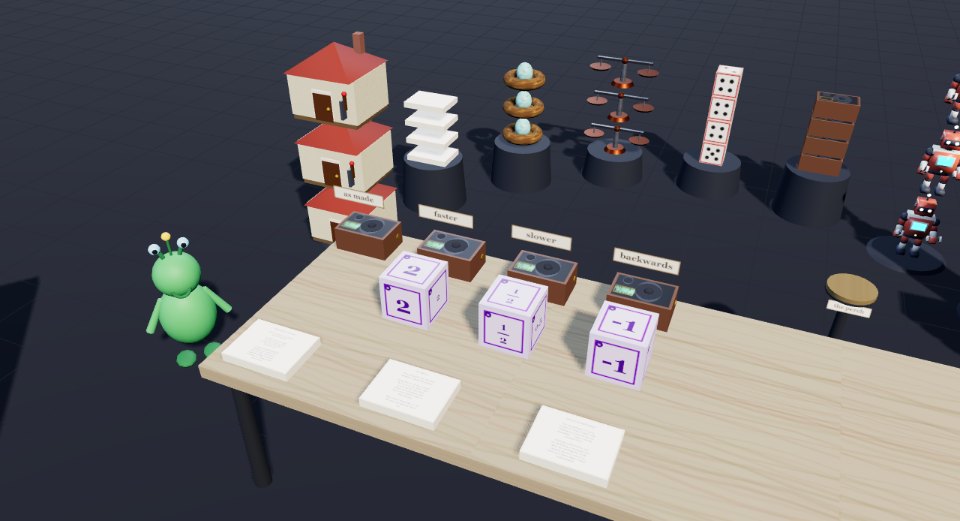
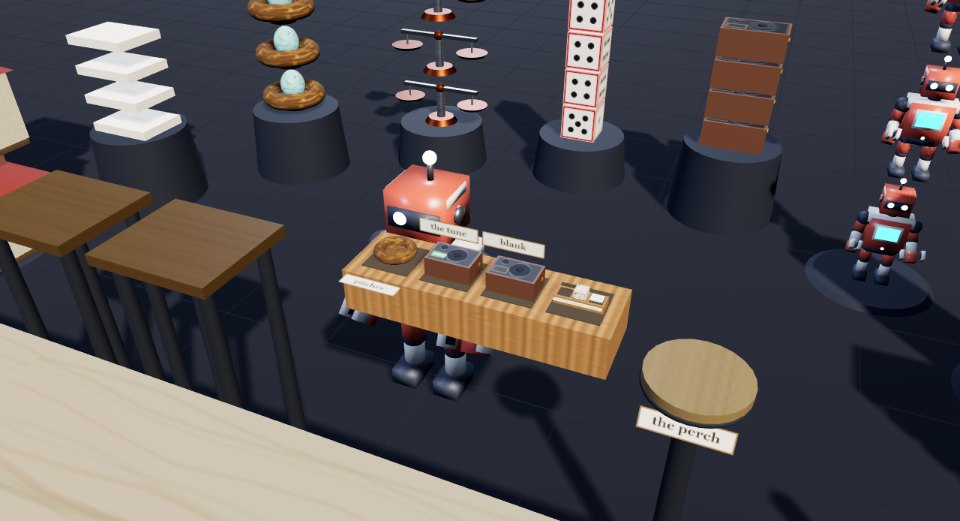
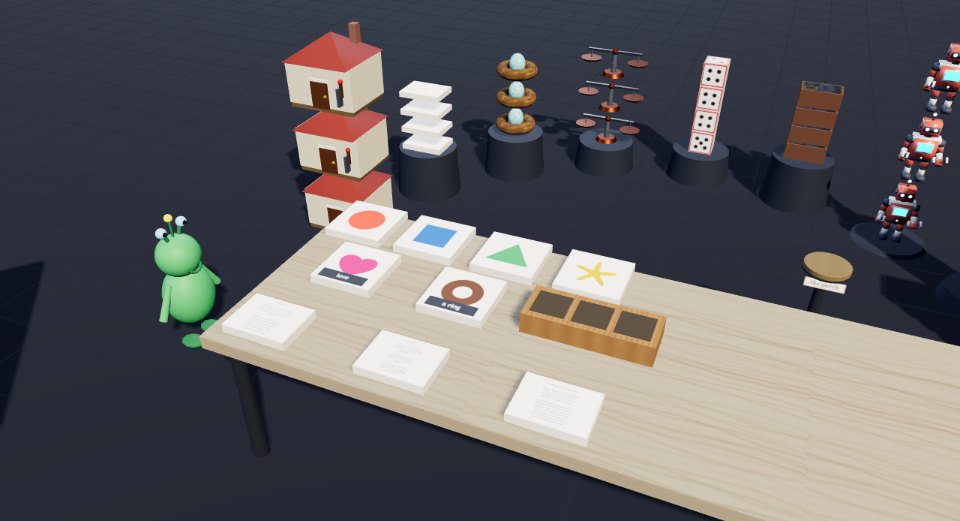
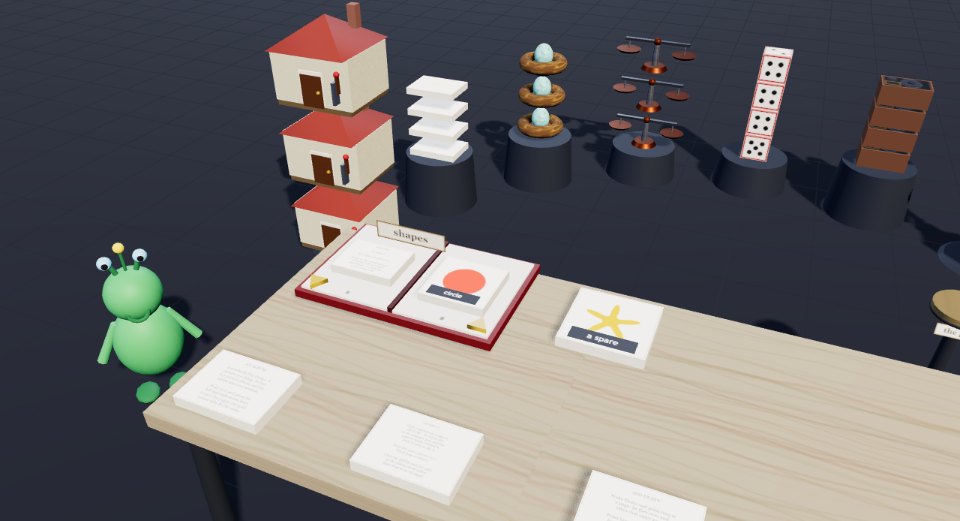
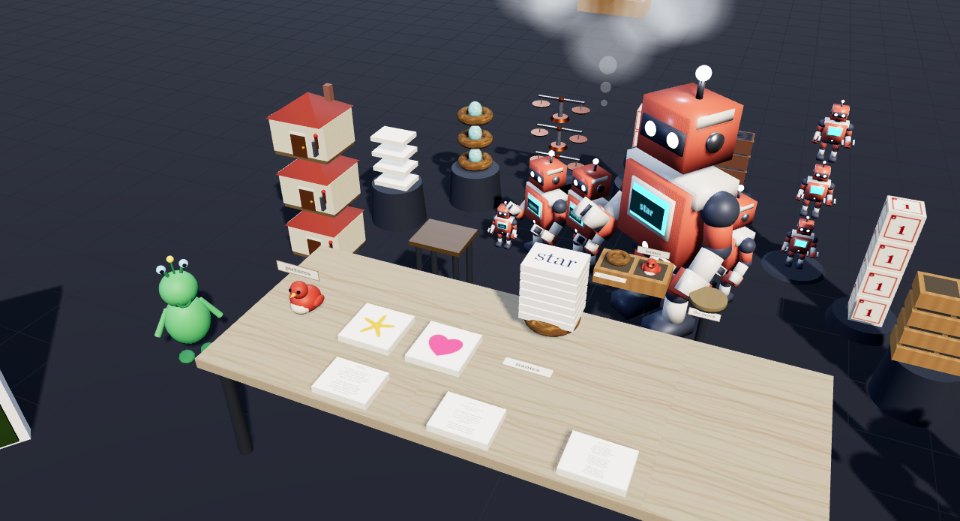
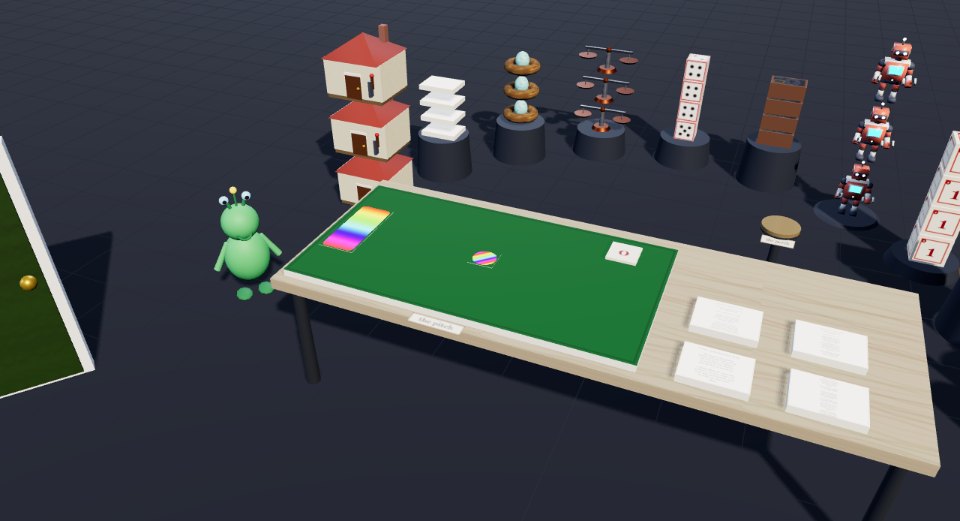
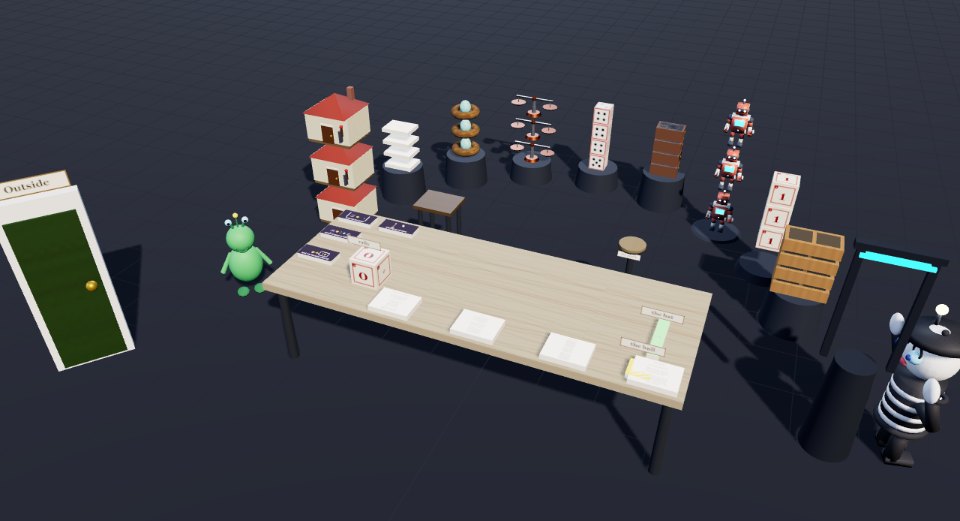
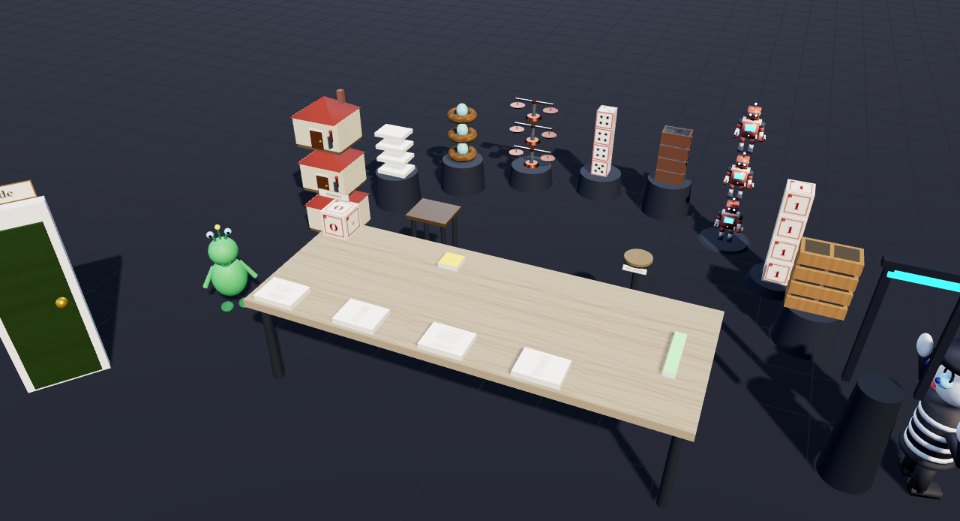
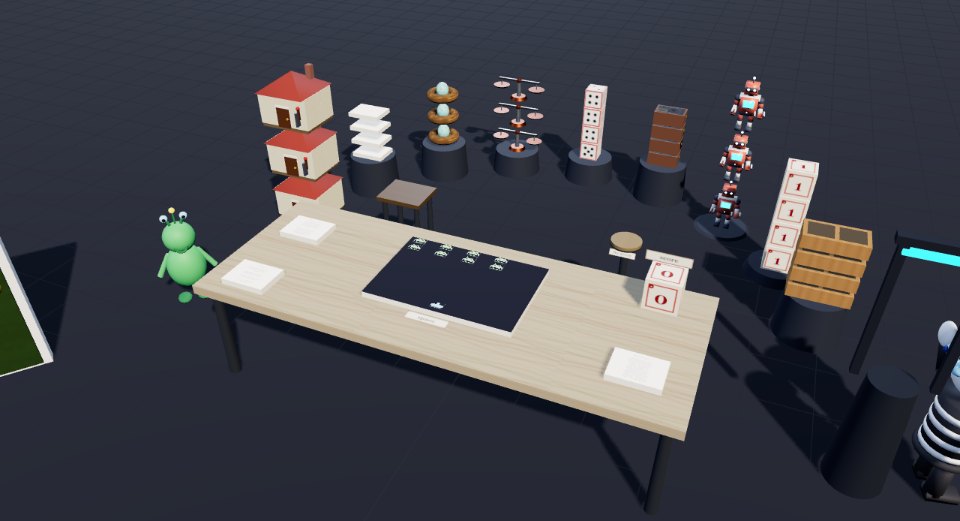
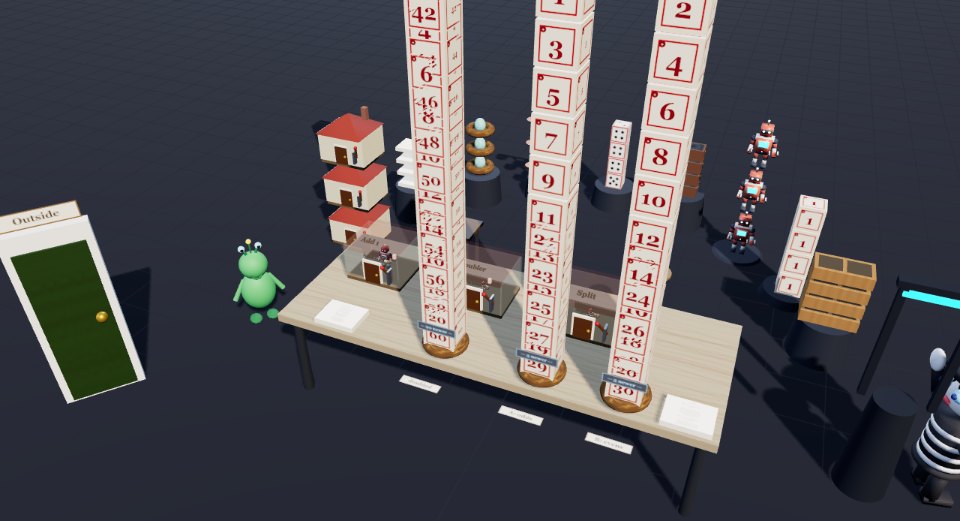
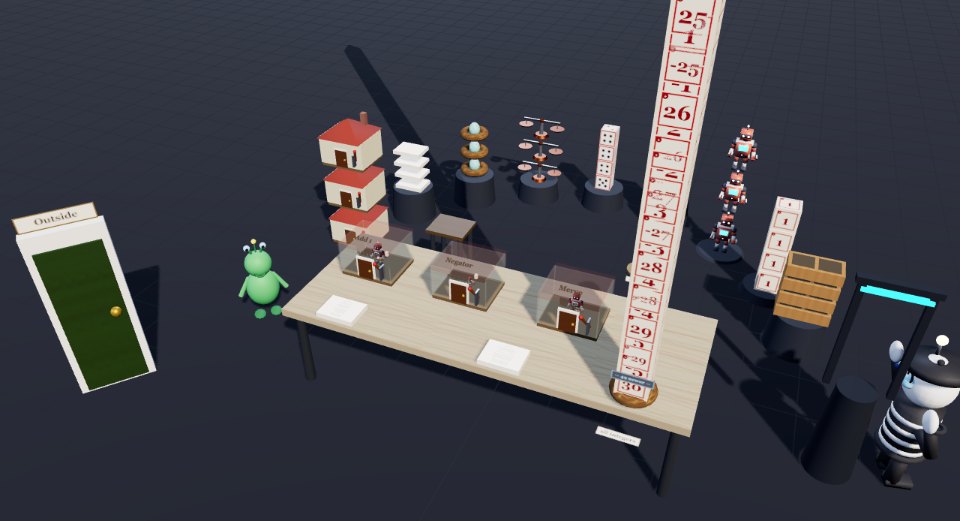
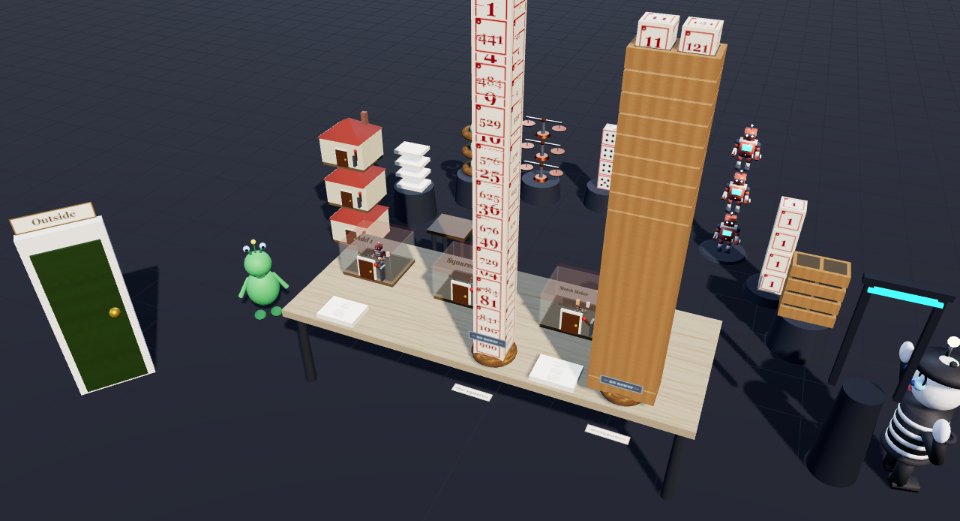
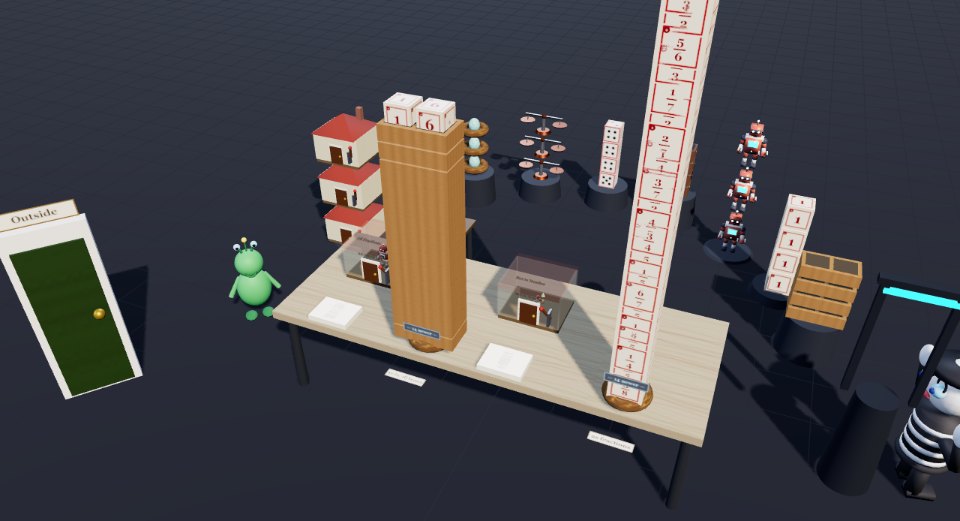
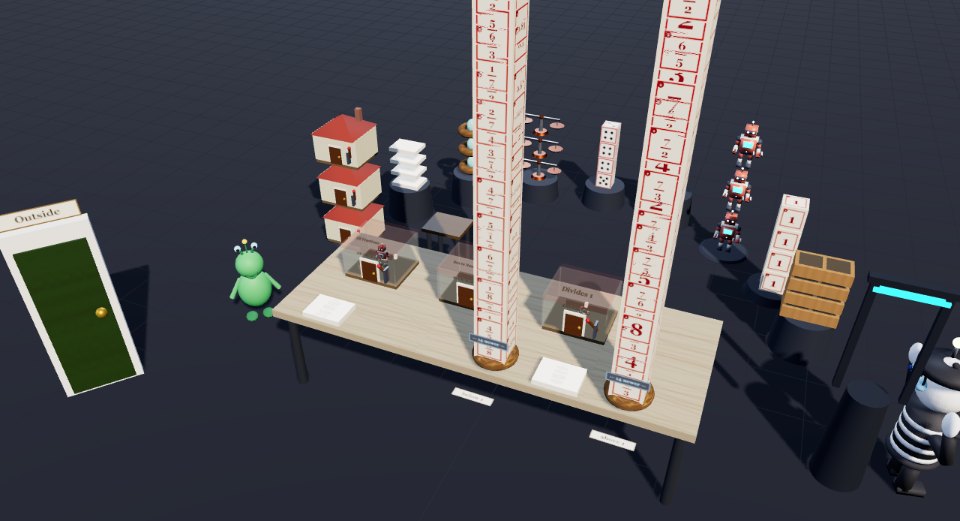
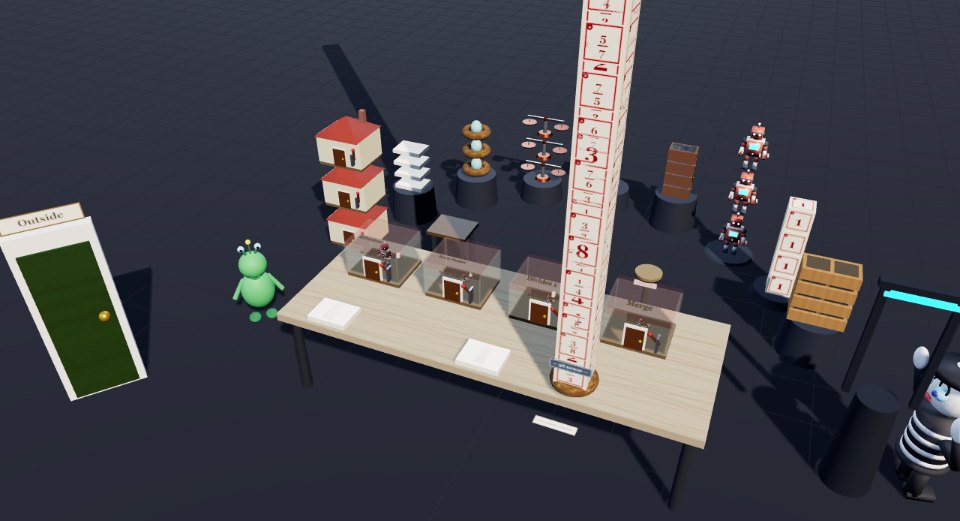
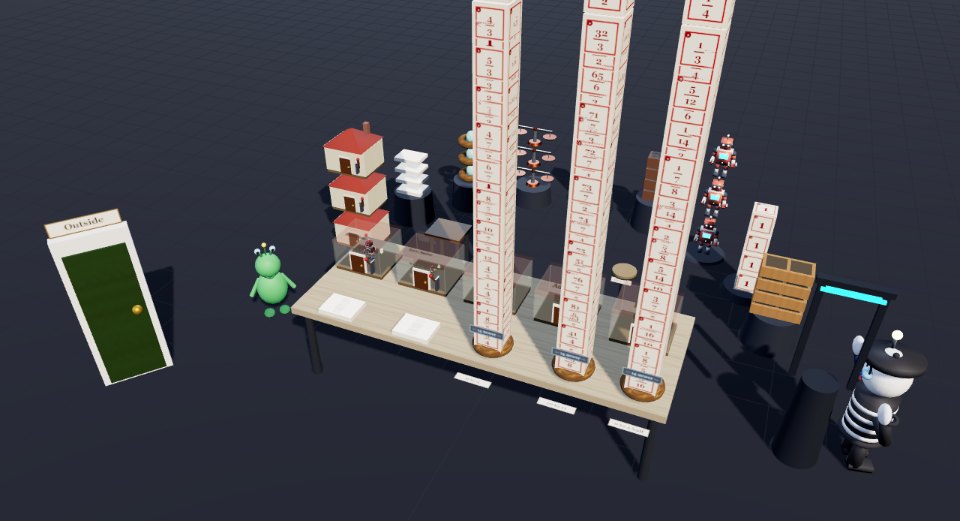
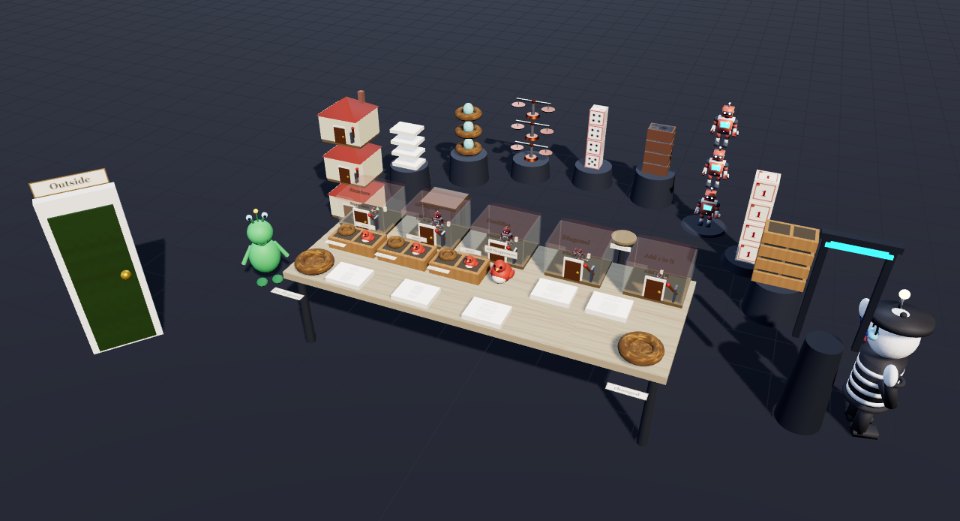
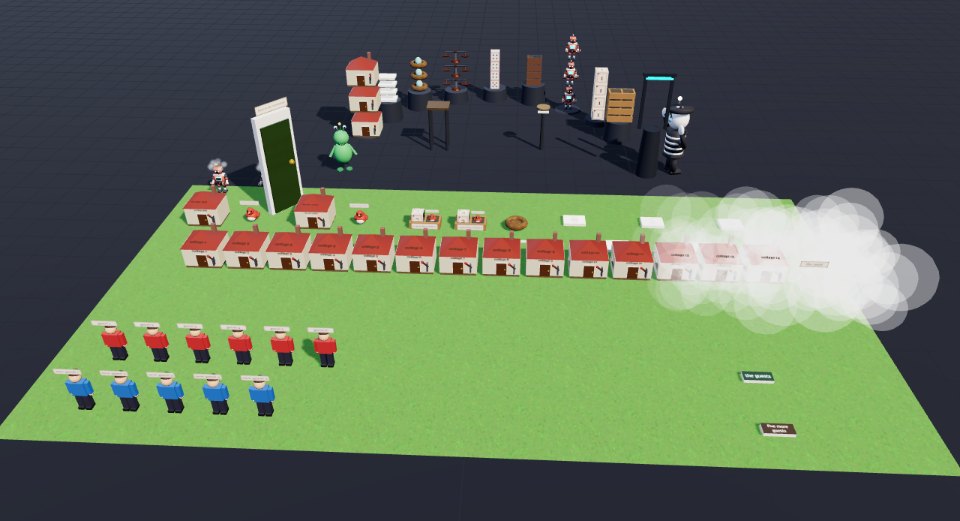
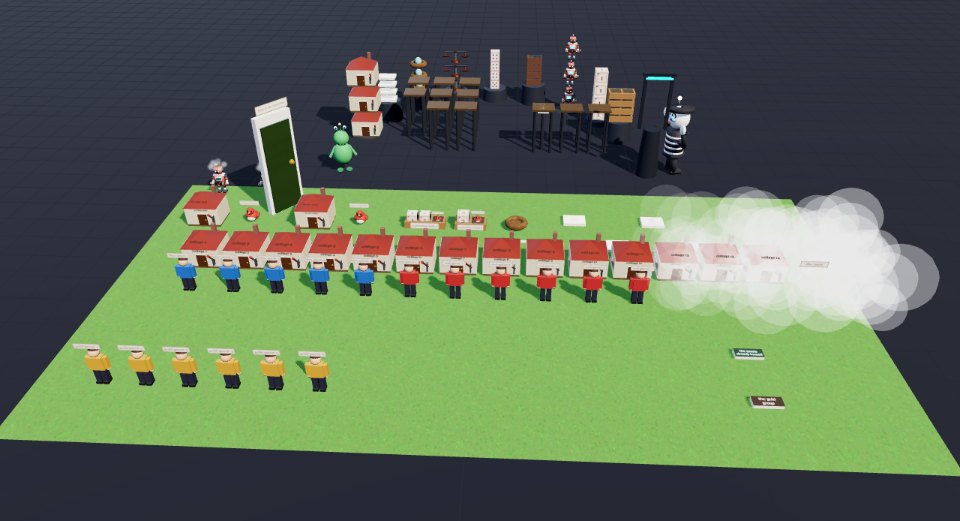
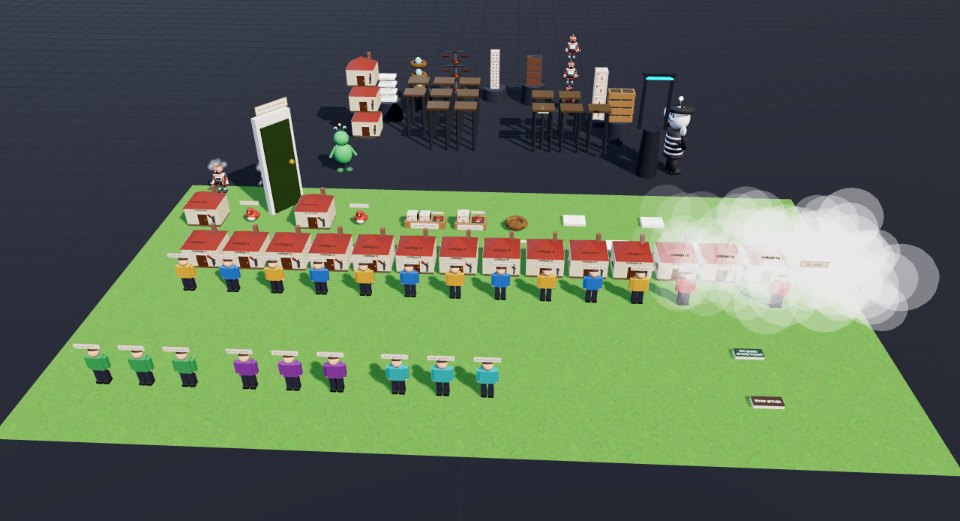
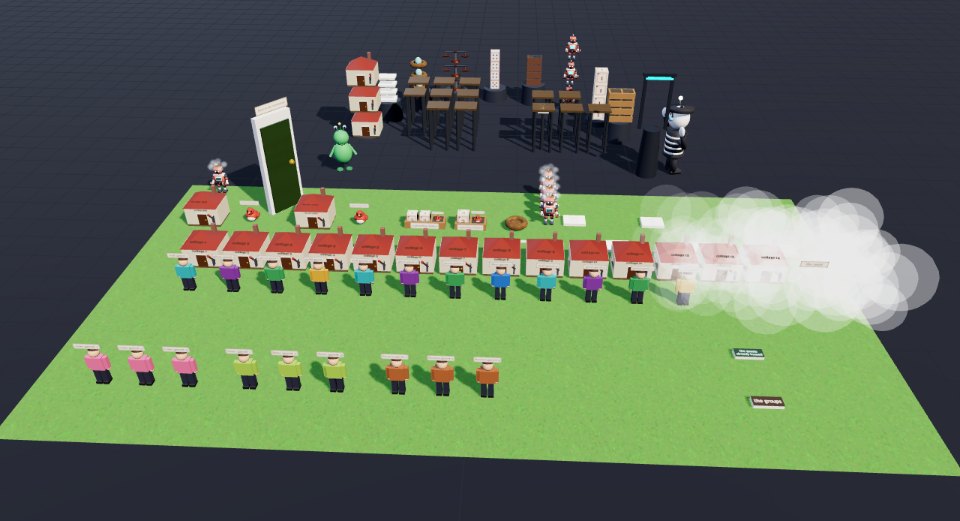
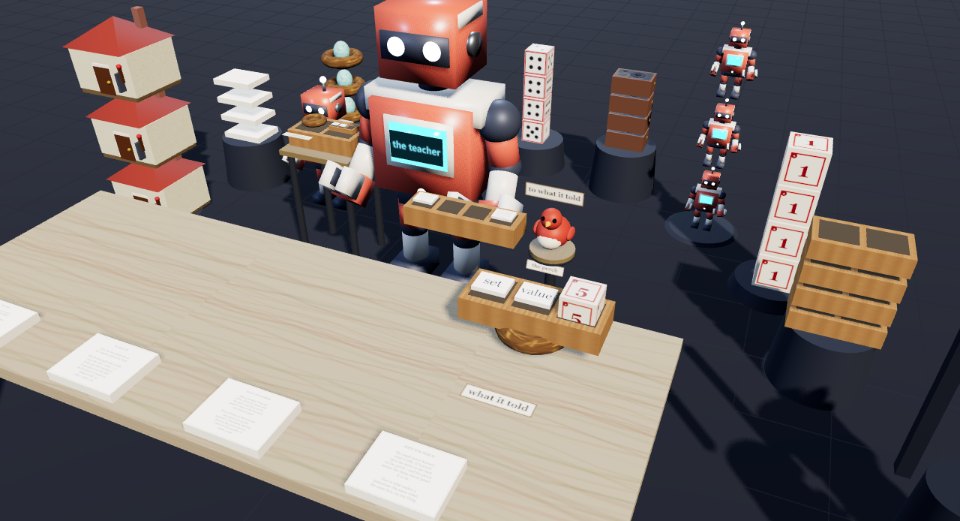
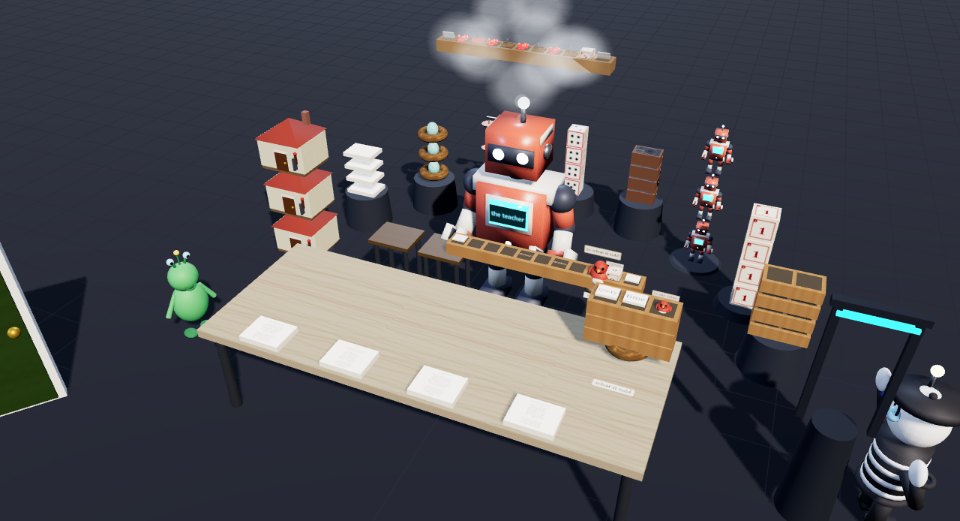
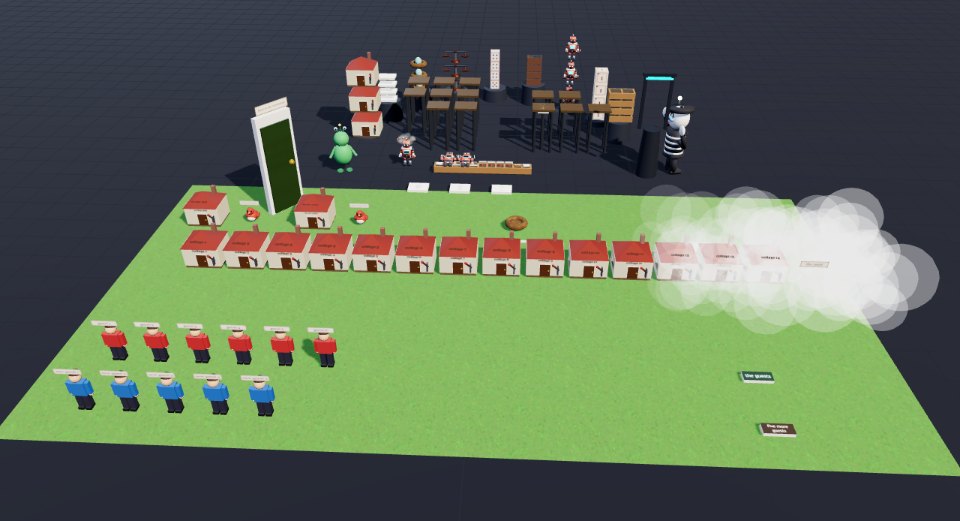
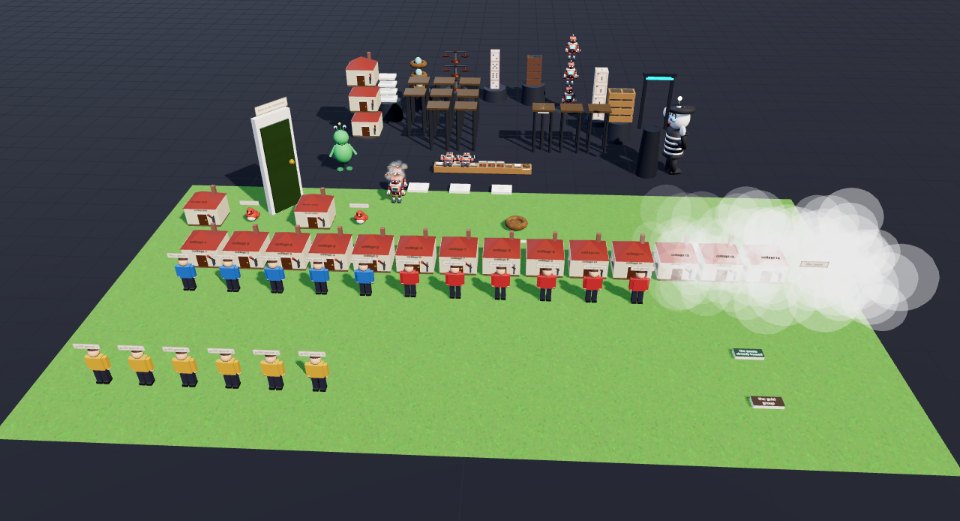
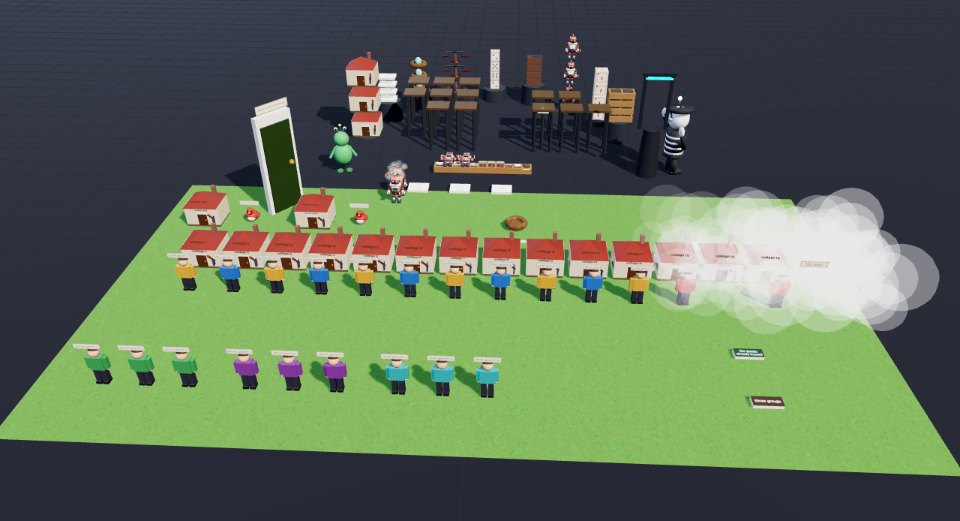
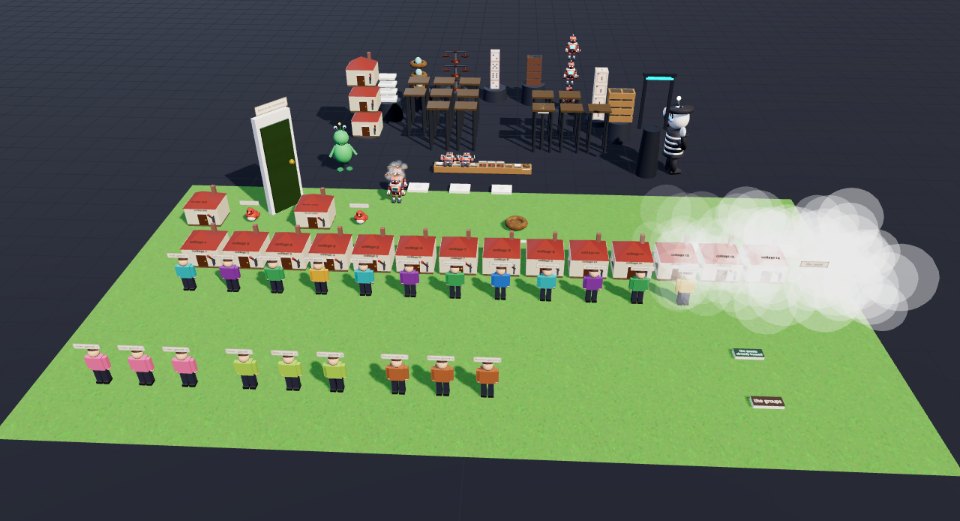
Every example world in examples/, as a route: what each one teaches, what it needs first, how to run it and what you should see, and one thing to change and predict before you run it again. Each opens in one workshop tab, where the button Start this world over on the title card puts it back as it began; the manual explains the parts.
Each card says what you do — try it run it and predict, change it change one thing and predict, read it read the robots to predict, build it train a robot of your own — and, apart from that, how much is inside. Tick tried on a card and this browser remembers it.
First steps
One visible change, a small robot, a predictable result.
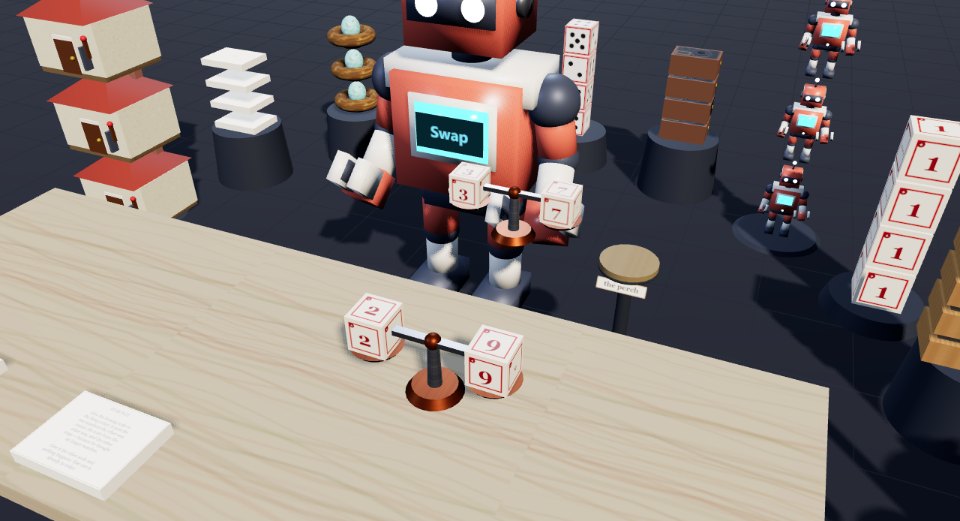
1 🔀 Swap numbers
A robot does one thing to what it is given, and stops when its thought no longer fits.
try itinside: small, 1 robot, the longest 6 steps
Run: Give the leaning scale to the Swap robot: it swaps the two pans, the scale tips the other way, and the robot stops after one round.
Change and predict: Give it the OTHER scale, the one already the right way round. Predict: does it run, and why not?
Run: Press SPACE on the star: it slides right and stops at the table’s edge; "." stops it early. The Mover is on its back: hold the star and press Ctrl+P to go through its door and watch.
Change and predict: In there, pick up the step and type a minus. Predict which way the star goes — then make the number bigger.
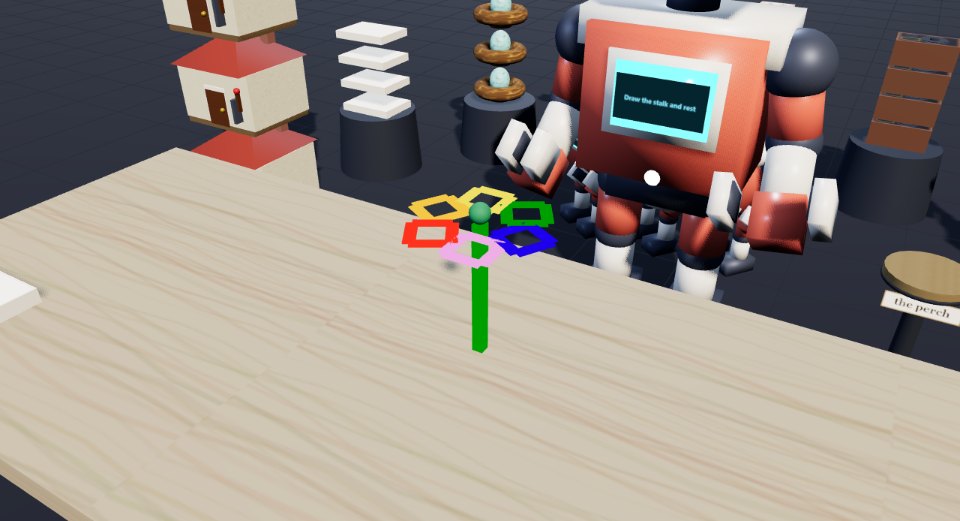
A repeat inside a repeat: four sides make a square petal, six petals on spokes make a flower — each its own colour from a queue on a nest, and invisible ink keeps it one drawing.
change itinside: medium, 4 robots, the longest 13 steps
Run: Press Start the robot: six square petals appear round a centre, each a different colour. The next member button above Trained actions shows each robot.
Change and predict: Set petals left to 3 and next spoke from 240° to 300°. Predict the flower; then sweep it up with Dusty — one thing.
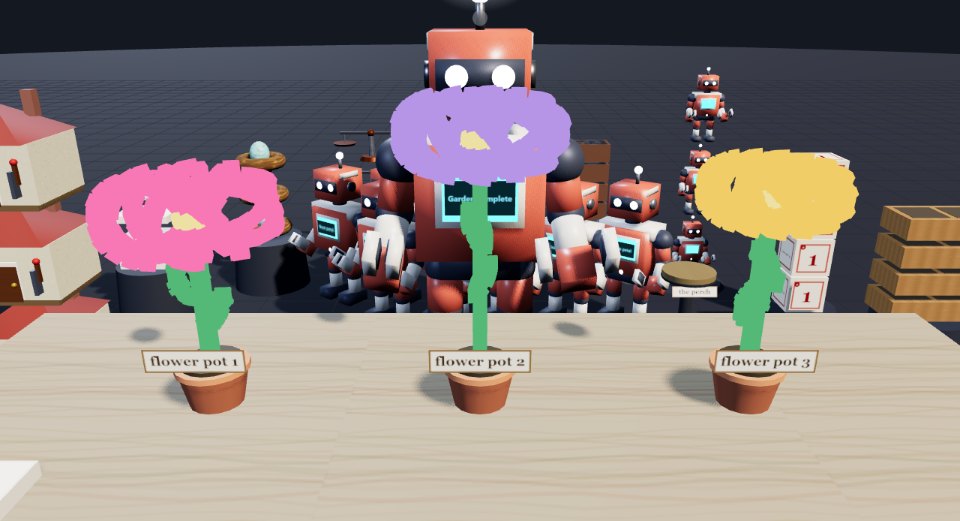
A repeat inside a repeat inside a repeat: twenty segments make a curved petal, petals make a flower, three flowers make a garden — each flower one trail, the pen invisible between stem, leaves and petals.
change itinside: large, 8 robots, the longest 251 steps
Run: Press Start the robot: three pens rise from their pots, grow a stem and two leaves, and draw 8, 10 and 12 tilted petals with a golden centre. Instant shows it at once; the team puts its box away when the garden is done.
Change and predict: Set flowers left to 1 and watch one flower. Then in the letters box change “move yaw” from 18 to 20. Predict the petal.
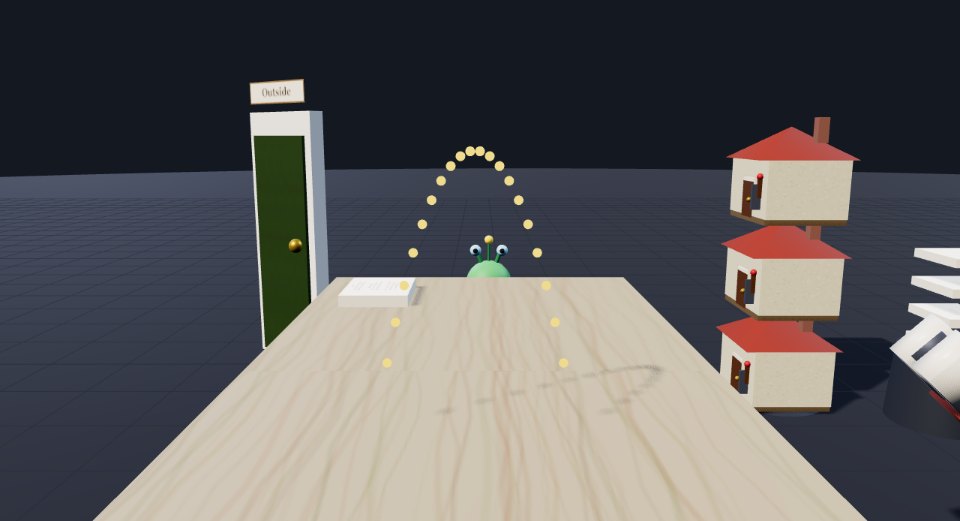
Run: Press Start the robot: the spark rises and falls in twenty steps and leaves an arch of dots behind. The world opens from the side, where the arch reads.
Change and predict: Set gravity to 0. Predict the shape before running; then try −1/200.
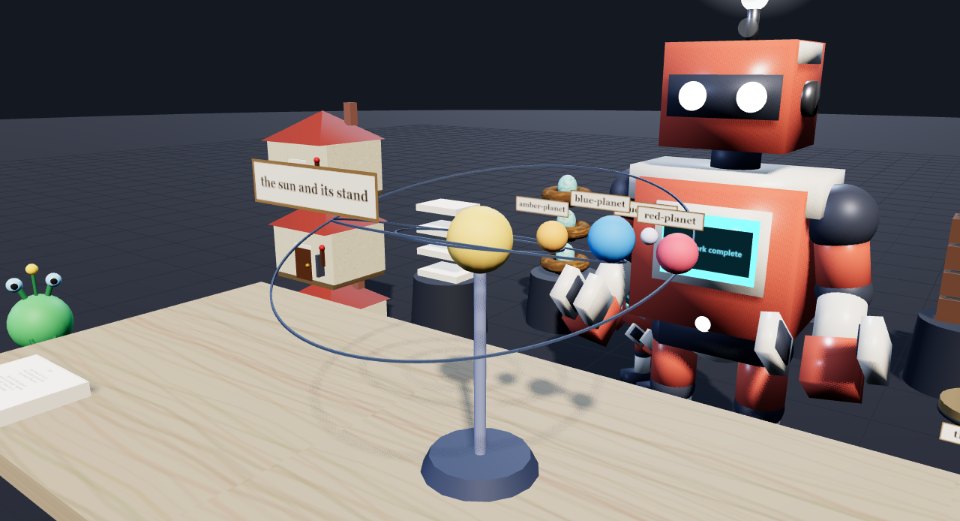
Angles into positions: every tick each angle grows by its own step, modulo 360, and sin and cos badges turn it into a place on a tilted track — three planets and a moon that adds the blue planet’s position to its own.
change itinside: large, 2 robots, the longest 202 steps
Run: Press Start the robot: the planets go round the sun on their tracks and the moon round the blue planet, for 120 ticks; the periods are 30, 60, 120 and 15 ticks, so everybody comes home together.
Change and predict: Set ticks left to 30. Predict which planet gets all the way round. Then change the blue planet’s degrees per tick to 12 and predict the moon.
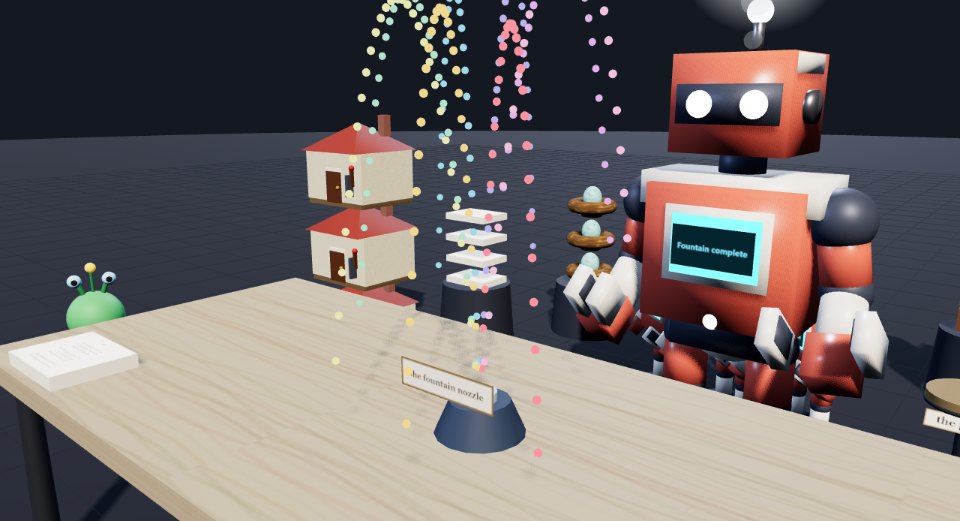
Velocity and gravity: each spark keeps three velocities in its record, moves by them every tick and stamps a dot, and gravity comes off the upward one — so it slows, turns and falls. Eight sparks reused for three bursts.
change itinside: large, 4 robots, the longest 310 steps
Run: Press Start the robot: eight coloured sparks rise from the nozzle in arches of dots, hide after thirty ticks, and burst again turned 15 degrees, three times; the last burst’s dots remain.
Change and predict: Set gravity per tick to −1/250. Predict the height of the arches. Then set sideways speed to 0 and predict the shape of a burst.
Optional challenge — a bigger jump than the cards round it: a list split at a number to pick the Nth thing, and three letters to one pad. Skip it for now and come back after Things that talk.
A pad with a robot on its back: a die picks the Nth colour from a list by splitting the list there, and three letters paint the pad.
change itinside: large, 1 robot, the longest 28 steps
Run: Press SPACE on the pad: its colour changes again and again, one of the seven; "." stops it. Ctrl+P on it shows the robot at work.
Change and predict: Open the panel and join another [name | ink] pair on the list, then give the die a face. Predict how often the new colour comes up.
Run: Press SPACE on the star and move the pointer over the table: the star comes to your hand and stays with it. The Follower is on the star’s back: Ctrl+P to watch it.
Change and predict: Change the letter to [move | position | …] instead of set. Predict: does the star follow, or run away?
Run: Press SPACE on the star: it runs to the right edge, turns round, runs back, and keeps going. The team is on its back: Ctrl+P to go through its door and watch them take turns.
Change and predict: Take the “at the right” robot out of the team. Predict what happens at the right edge.
Run: Take a letter off a notebook page, put a bird of your own in its last hole, and give it to the bird to the computer: the answer — the time, the date or the clock — lands on your bird’s nest.
Change and predict: Ask for the time twice a minute apart. Predict which holes change — and why the date would not.
Run: Drop the turtle pad on the shell’s EDGE — the middle makes it ride on the shell instead of steering it — and press SPACE; give the bird “pendown”, then [forward] and [right 90] four times: a square is drawn on the table.
Change and predict: Give it [right | 120] instead of 90, three times. Predict the shape.
Run: Drop the ellipse pad on the star’s EDGE (the middle would only make it ride on the star) and press SPACE on the star: it goes round and round an ellipse; "." stops it, Ruby lets go.
Change and predict: Change one of the two radii. Predict the shape before you look.
Run: The house is switched on already. Drop a request on the bird marked “requests”: she flies it in, the Teller answers with a slip, and the balance stays out of reach.
Change and predict: Try the −500 request. Predict which slip the Teller sends, and why the scale decides.
Run: Pick a picture up: the card reads it as a picture. Hold one and press Ctrl with the up arrow: it grows, keeping its own proportions. Drop one in the empty box: it goes in like anything else.
Change and predict: Take a letter such as [set | width | 2] off a notebook page, put a picture’s bird in its last hole, and send it. Predict what happens to the picture.
Run: Point at the album and press the left and right arrow keys, or click its gold corner tabs: six pages, a picture on each. Click a picture to lift it off its page as an ordinary pad; drop it back to file it.
Change and predict: Drop the spare star picture on a blank page. Predict whether the arrow keys reach it — then click the spine and pick up the whole album at once.
Exploring Infinity 7: three nests filling term by term, one for one — the pairing made visible (the post takes a moment, so the counts can differ briefly).
try itinside: large, 6 robots, the longest 12 steps
Run: Give the three Sequence boxes to the All Sequences bird and pull the three levers: the team takes a term from each in turn and the diagonal piles up.
Change and predict: Predict the first six terms the team takes, in order.
57 🏨 Resort Infinity 3: a new infinite group infinity
Resort Infinity 3: a whole infinite group arrives at a full resort. Adding five will not do — everybody moves from i to 2i, and the newcomers take the odd cottages, 2i − 1.
build itinside: large, 93 robots, the longest 20 steps
Run: Go outside. Train a mover for the moving office (given [where I live | bird]) and a clerk for the front desk (given [number | group | bird]), give each to its bird, then SPACE on the gold group: everybody moves to the even cottages and the gold guests take the odd ones.
Change and predict: Before you train: which cottages come free when everybody doubles their address? How many is that?
58 🏨 Resort Infinity 4: three infinite groups infinity
Resort Infinity 4: three infinite groups at once. Everybody moves from i to 4i; guest i of group j takes 4i − j — the group number is in the letter now.
build itinside: large, 118 robots, the longest 20 steps
Run: Go outside. A mover that multiplies by four, a clerk that computes 4i − j from the number and the group in the letter, and SPACE on three groups: green, plum and teal fill three cottages in every four.
Change and predict: Or solve it as problem 3 three times over. Predict where green guest 2 ends up either way.
59 🏨 Resort Infinity 5: infinitely many groups infinity
Resort Infinity 5: infinitely many infinite groups. Everybody doubles; a newcomer (i, j) gets one whole number n by counting the grid in growing squares — a scale weighs i against j to pick the sum — and takes cottage 2n − 1.
build itinside: large, 116 robots, the longest 20 steps
Run: Go outside. Give Double to the moving office and Weigh — a team of four: weigh, then one of two sums — to the front desk, then SPACE on the groups: rose, lime and brown take 1, 3, 5, 7, 9, 11 and on into the mist.
Change and predict: Read the pad “Why growing squares”. Predict n for (3, 2) and for (2, 3) before you look at the cottages.
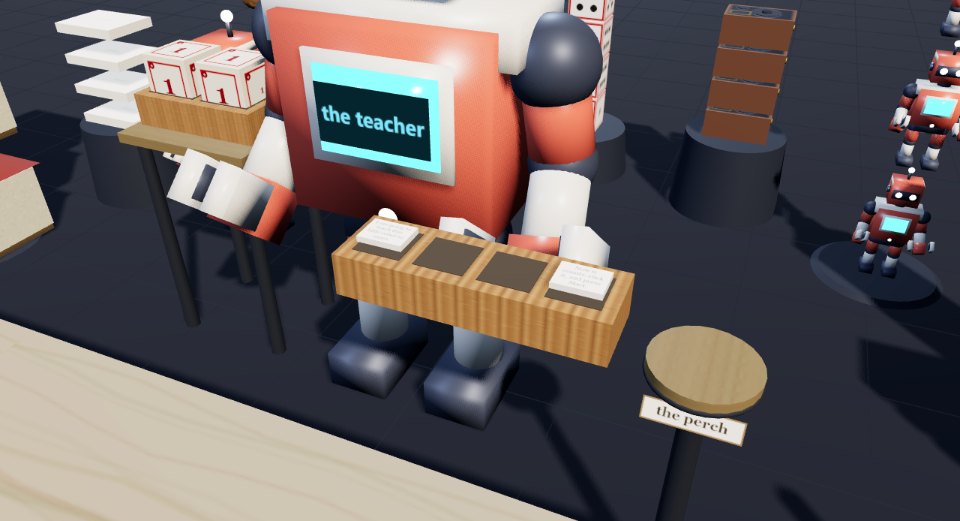
Run: Give the four-hole box to the teacher and press Start: the pupil takes a desk and is taught; then click the pupil and press Start to see it do what it learned.
Change and predict: Predict what the pupil’s thought says after the lesson, before you look.
Run: Give the eleven-hole box to the teacher and press Start: four pupils are trained in turn and go on to a number’s panel; take the number out and SPACE on it, and it counts.
Change and predict: Predict which pupil asks and which tells, from their thoughts alone.
A robot solves Resort Infinity 3: teaches the mover (×2), waits for the bell on a nest of its own, teaches the clerk (×2, then −1) on a three-hole letter, and lets the gold group in.
read itinside: large, 99 robots, the longest 25 steps
A robot solves Resort Infinity 4: teaches ×4 to the mover and 4i − j to the clerk — a copy of the group wearing a minus sign — and lets three groups in.
read itinside: large, 124 robots, the longest 25 steps
A robot solves Resort Infinity 5: teaches the mover and, since a lesson trains one robot and the clerk is a team on a scale, hands the growing-squares team over ready-made — and says so.
read itinside: large, 128 robots, the longest 20 steps
Run: Go outside and give the teacher its box: everybody doubles, the pairs (i, j) are numbered by growing squares, and rose, lime and brown take the odd cottages.
Change and predict: Could a teacher teach a team? Predict what the lesson would have to do that this one cannot.